

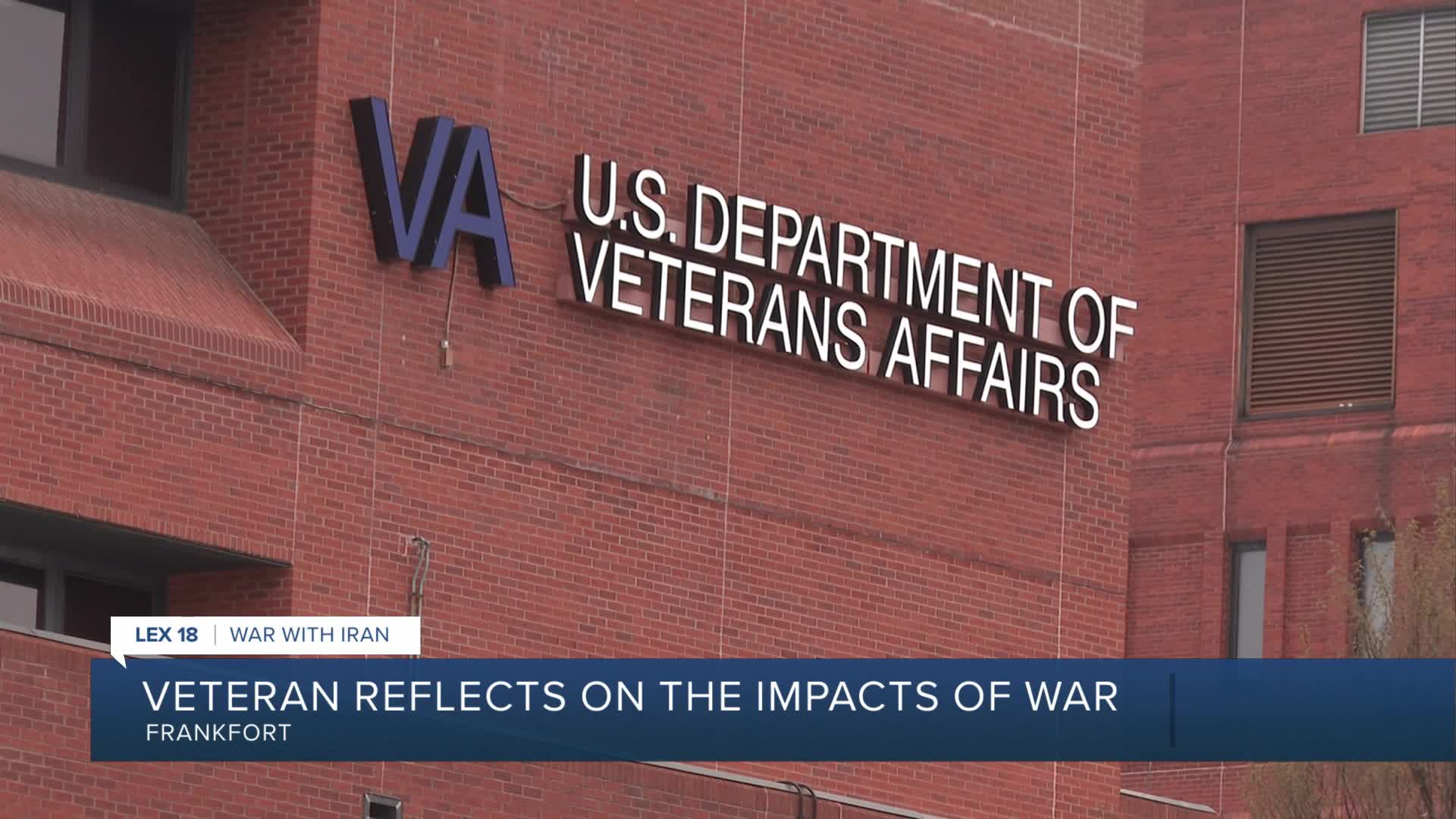


FRANKFORT, Ky. (LEX 18) — Jeremy Harrell served in the U.S. Army and was deployed to Iraq from 2003 to 2004. Now, as U.S. and Israeli strikes on Iran have been reported, the veteran said he feels the weight of the conflict — even from home.
Harrell said serving in the military was an honor, but it came at a cost.
"It was always an honorable profession, but with that came with a lot of challenges," Harrell said.
Having seen firsthand what war looks like, Harrell said the images coming out of Iran are familiar. He described the reality of deployment as something that stays with a service member long after they return.
"There is a lot of destruction, a lot of violence, and a lot of misunderstanding when we're deployed. And these days deployments last much long then they have had in the past," Harrell said.
During his own deployment, one feeling never left him.
"There is always that uncertainty of will I come home?," Harrell said.
Now, watching U.S. troops actively engaged in conflict, Harrell says his thoughts are with those serving overseas.
"For our brothers and sisters in Iran. We need to pray for them and be ready to help them when they come home," Harrell said.
That sense of responsibility is what drives Harrell's nonprofit, Veteran's Club, which offers mental health resources for veterans and their families. Additional resources are also available through the 988 Veterans Crisis Line and the U.S. Department of Veterans Affairs.
Harrell said communities often step up during times of active conflict, and he has seen that support firsthand.
"Often times the community rallies around veterans in times like this where there is an active conflict. And we love in this state and this country that they're a lot of patriots who care about veterans," Harrell said.
From his own experience, Harrell said the men and women currently fighting will not come home the same.
"And when they come home they're trying to redeem all that time, but they typically come home changed," Harrell said.
According to the U.S. Department of Veterans Affairs, PTSD is three times more likely among veterans who were deployed. Harrell said even after his own deployment, he continues to face mental health challenges — though he has received treatment.
"When they come home you're trying to process all that. That's what lead to some of the mental health we have," Harrell said.
He said the experiences of combat leave a lasting mark that cannot simply be undone.
"So they carry around all this residual from the negative experience they had," Harrell said. "We can work through the experience we witness, but we can't erase the memories."
Through his nonprofit work, Harrell has found that connecting veterans with one another is one of the most powerful tools available.
"The veteran on veteran connection is powerful," Harrell said.
As the conflict continues, Harrell noted that he will be ready to welcome today's soldiers home and help them navigate the road ahead.
Here is the link for the VA website: VA.gov Home | Veterans Affairs.
To learn more about the Veteran's Club, along with upcoming events, click here.
