

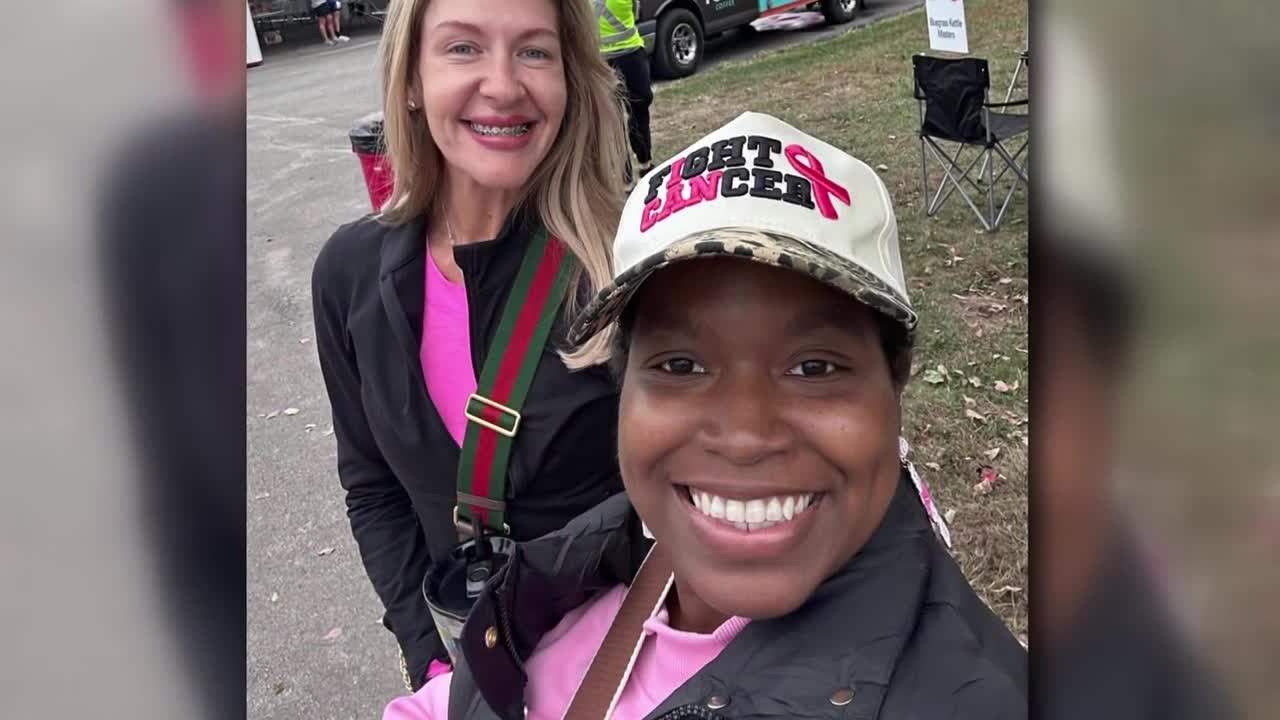


LEXINGTON, Ky. (LEX NEWS) — NICHOLASVILLE, Ky. — A Kentucky woman is sharing her breast cancer journey in hopes of encouraging other young women to pay attention to their bodies and take their health seriously.
Angel Brooks, a Harlan native who now lives in Richmond, shared her story during an event honoring and celebrating cancer survivors at the R.J. Corman Railroad Group campus in Nicholasville during Breast Cancer Awareness Month.
Brooks was 29 when she was diagnosed with breast cancer in December 2025.
“You get that diagnosis, and you’re like, ‘Oh my God, am I about to die or am I going to be OK?’” Brooks said.
She remembers fearing the worst, but amid the uncertainty, Brooks decided she wanted to use her voice to document the good, the bad and the ugly of her diagnosis and treatment.
“Women think that just because you’re 29, 30 that you can’t get breast cancer, but you can,” Brooks said. “So I wanted to just share my story and share my take on that.”
Brooks now has more than 40,000 followers across her social media platforms, where she shares her experiences and raises awareness about breast cancer.
She said she has already seen the impact of telling her story.
“People stop me and they’re like, ‘I’ve seen your story, and I went and got checked because I felt a lump,’” Brooks said. “And I’m like, ‘Good.’ Then I know that what I’m doing is helpful.”
Sharing her journey also gives Brooks a way to look back on everything she has overcome.
“So that in the future I can see how far I’ve come, but then other people can see how far I’ve come through the journey,” she said.
Dr. Nicola Jabbour, who has cared for Brooks throughout her cancer journey, praised her courage and resilience through the challenges she has faced, from diagnosis through treatment.
Brooks underwent 16 rounds of chemotherapy before completing that phase of treatment. She reached another milestone Friday, completing her final radiation treatment.
Now, Brooks hopes her experience will encourage other young women to remain vigilant about breast cancer and not assume their age means they are not at risk.
“Do this for future you, for sure,” Brooks said.
Routine mammograms for women at average risk generally begin at age 40, meaning younger women may not yet be undergoing regular screening. For Brooks, that makes awareness of changes in the body and conversations with a health care provider especially important.
Her message after months of treatment is simple: Pay attention to your body, seek medical care when something doesn’t seem right and don’t assume breast cancer can’t happen to you because you’re young.
