

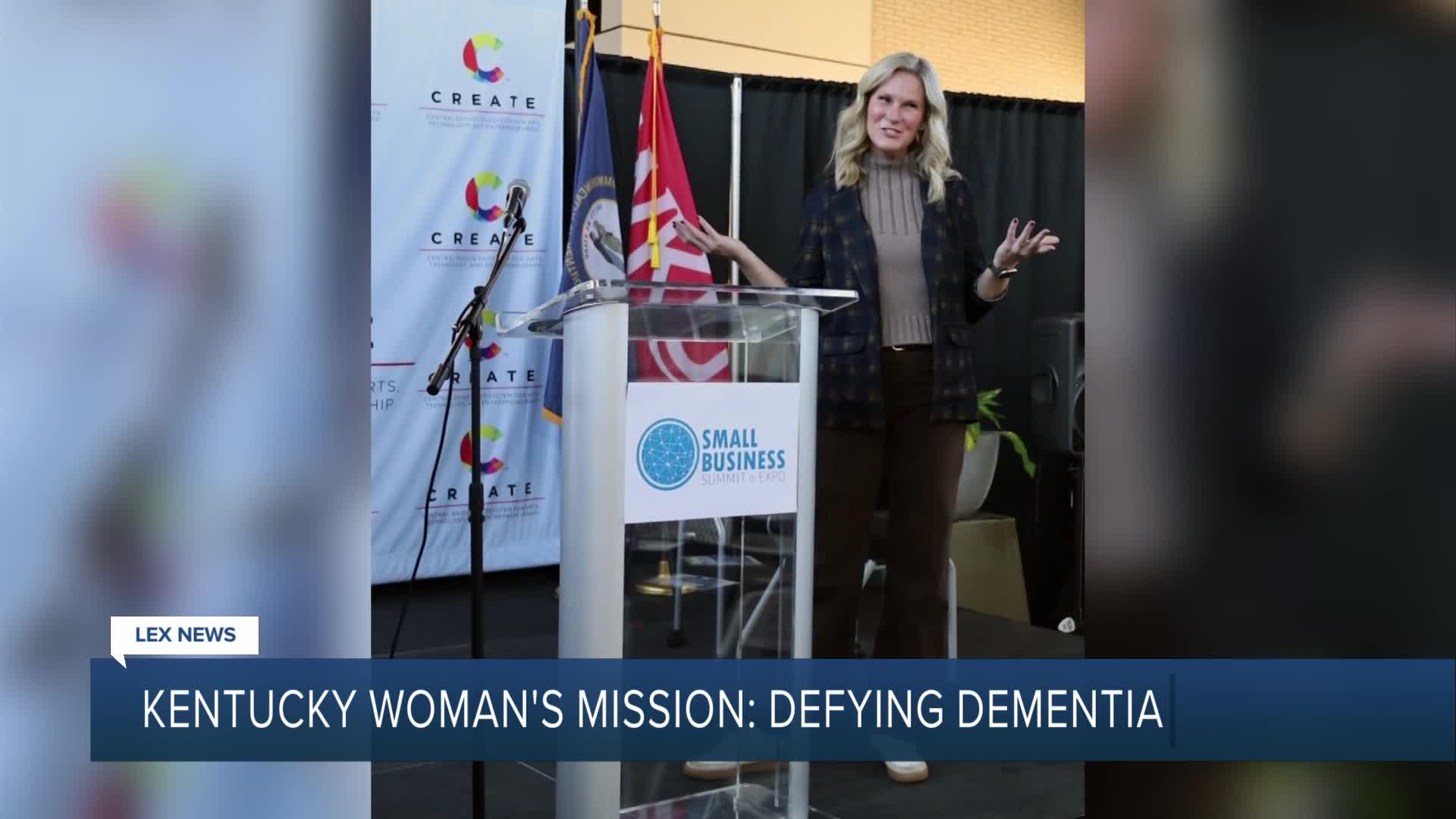


(LEX NEWS) — A new case of dementia is diagnosed every 3 seconds, according to Alzheimer's Disease International, but a Kentucky health specialist says nearly half of all cases are preventable.
Jenny Jacobs knows the impact of dementia firsthand. She served as the primary caregiver for her father, who passed away from dementia and Parkinson's disease in May 2024.
"It's very different when it's personal," Jacobs said.
After his death, Jacobs took time to heal before channeling her grief into action.
"After he passed, I took some time to sort of reset and get my life back together and grieve," Jacobs said.
Jacobs founded Defying Dementia in January 2024, offering concierge services across Kentucky to support those living with dementia, along with their families and caregivers.
"If we can create awareness we can change the way that things are and that's the only way we're going to do it," Jacobs said.
Her mission centers on proactive brain health.
"I want to continue to push and get the word out that you can be proactive about your brain health," Jacobs said.
Jacobs points to 5 habits that can help protect the brain and improve the chances of avoiding dementia:
- Follow a Mediterranean diet (mind diet), a few servings of fish per week, leafy green vegetables, eating more vegetables, trying to avoid red meats, limiting alcohol and sugary processed foods.
- Exercise regularly (walking, moving in general is recommended. Specifically focus on spatial awareness with movement like yoga and tai chi and strength training while stressing to never "skip leg day.")
- Focus on sleep hygiene (adequate sleep each night)
- Seek social interaction to reduce isolation and find a purpose
- Engage in cognitive exercise
One example of cognitive exercise? Dual task exercises.
"Exercises that focus on your working memory where you're having to read information, store it and then actually have to go and complete that step," Jacobs said.
"There are some specific types of movement: choreographed ballroom dancing, singing karaoke, those can be considered cognitive exercises that you can incorporate regularly throughout your day."
Part of Jacobs' vision is to educate people about structured lifestyle changes to potentially reverse early-stage decline.
"Change the way that we care for those that are living with dementia, and support our caregivers that are caring for people who are living with dementia," Jacobs said.
Part of her commitment to patients includes setting up a personalized brain maintenance plan.
Alzheimer's Disease International projects that 78 million people worldwide will have dementia by 2030.
