

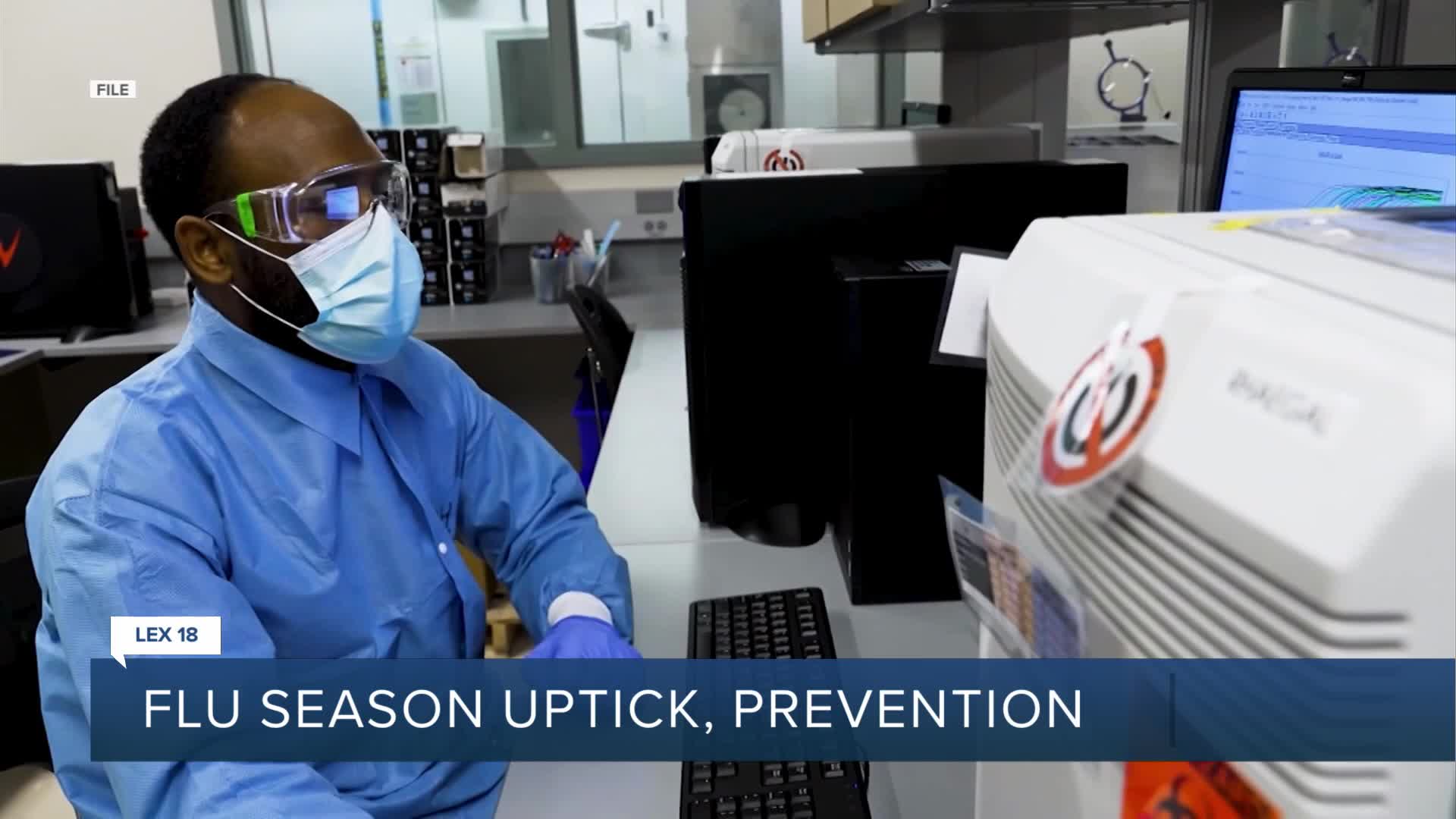



LEXINGTON, Ky. (LEX 18) — Flu season has been underway for a couple of months, and while many people have already fallen ill, experts at the University of Kentucky warn that peak flu season hasn't arrived yet.
The timing coincides with holiday gatherings where families and friends come together to spread cheer, love and sometimes viruses. According to the Centers for Disease Control and Prevention, there has been a nearly 15% increase in flu-A cases since Dec. 13.
Dr. Nicholas Van Sickels, the infectious disease and control medical director for the University of Kentucky, said they began seeing an earlier uptick in flu cases internationally, which indicated the U.S. would experience similar trends.
"Typically with flu, you see two big types, A and B," Van Sickels said. "One of them tends to be more severe and cause more severe illness, which is H3N2. This year, there's a little bit of a shift in the H3N2 virus that makes it different."
As of Monday, Dec. 22, 10 people were hospitalized at UK with the flu and six people with COVID-19. While COVID-19 and RSV haven't seen major surges yet, both viruses are still circulating in the community.
"COVID, we haven't seen a huge hit yet, and same with RSV we haven't seen a huge hit, but they're still circulating," Van Sickels said.
The symptoms for both flu and COVID-19 typically mirror each other, making it difficult to distinguish between the two without testing.
"Typically, the flu hits you pretty hard and makes you have fevers, chills, sometimes GI symptoms, feel very tired and achy," Van Sickels said. "Respiratory symptoms can come. It just, it tends to come hard and heavy and then lags for a few days afterward."
Van Sickels stressed that washing hands, sanitizing before cooking and taking at-home tests can all help keep people healthy during the holiday season. He also recommended increasing airflow during holiday meals.
"You could open your windows during your holiday meals, have a little airflow in the room cause that does help," Van Sickels said. "It reduces the ability for viruses to transmit."
However, Van Sickels' top recommendation remains getting the flu vaccine.
"It's never too late until flu season has passed," Van Sickels said.
