

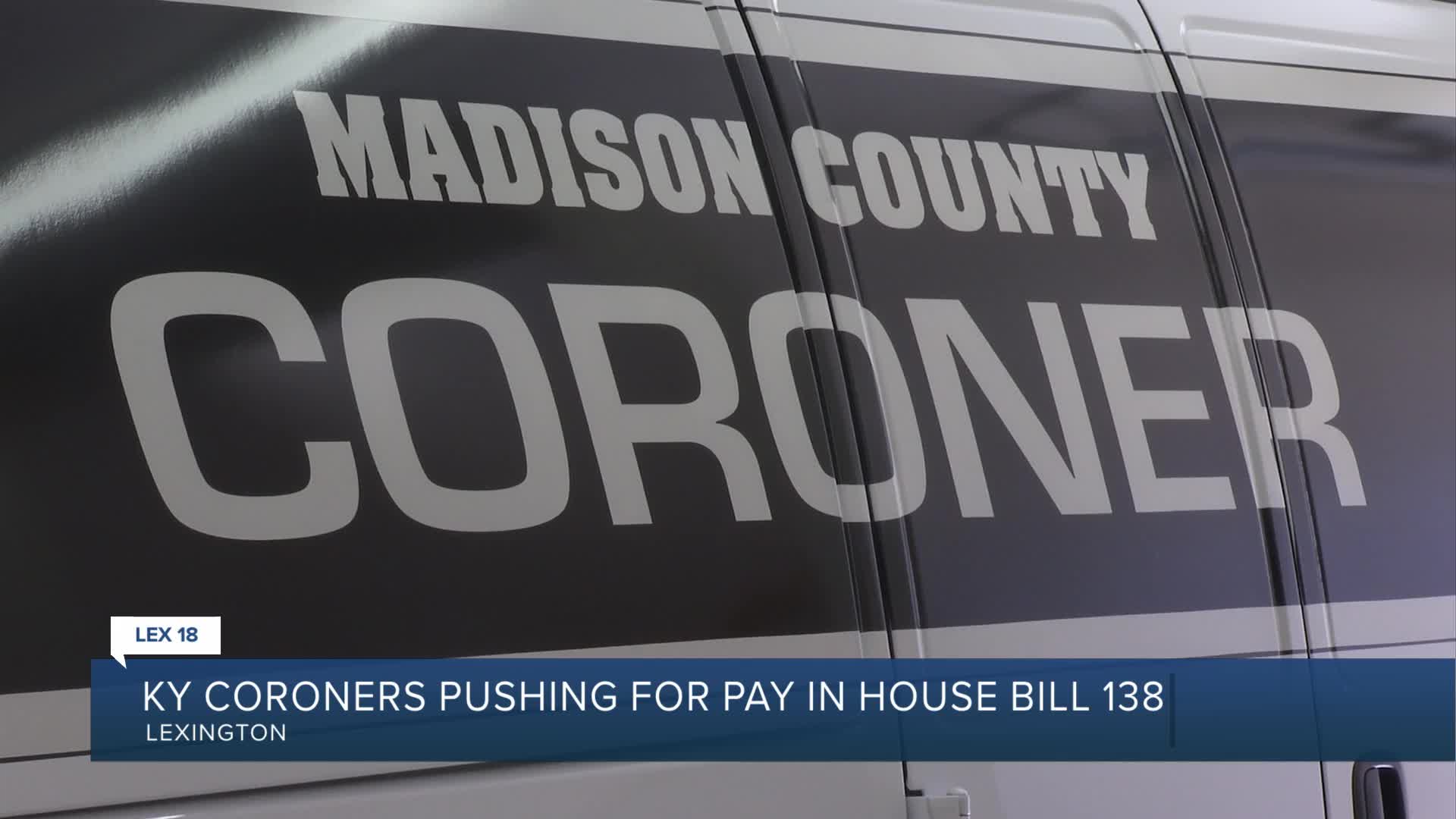


(LEX 18) — Kentucky coroners say they're on call every hour of every day, responding wherever death happens, yet many earn just a fraction of what other county officials make.
Fayette County Coroner Gary Ginn has been in rivers and hoarder homes, jails and hospitals. Coroners are required to investigate every death, often without hazard pay or incentives.
"When you're on call 24 hours a day, 7 days a week, 365 days a year, that's not a part-time job," Ginn said. "If someone has died there, that's where we go because we have to go and we have to do a postmortem examination. We have to view the body in the place that it's died and we have to investigate that death."
In Madison County, Coroner Jimmy Cornelison says some coroners don't even have basic facilities.
"I'm fortunate that I have a nice facility that's provided for me and you know, but there's people that don't have anything. And it's tough. It's tough on them," Cornelison said.
Despite these demands, many coroners across Kentucky make significantly less than other county officials. In 2025, two coroners made less than $5,000 a year. Twenty-seven made $10,000 or less. Sixty-eight made $20,000 or less. Eighty-nine made $30,000 or less. The average salary statewide was $24,000.
Ginn said he spoke to a previous coroner in Kentucky who resigned due to the pay.
"He was paying for body bags and for his gas and for vehicles and equipment, stretchers, all this, and the facilities and the utilities and all those things, and he couldn't afford it," Ginn said.
Ginn says the problem dates back decades, when coroners were left out of a state pay bill that included other constitutional offices.
"Since 1998, the coroners were, actually the way I look at it, was discriminated against by Governor Paul Patton," Ginn said.
Ginn and his committee of 5 other coroners in Kentucky are pushing for House Bill 138, which would put coroners on the same pay structure as other county officials based on population and years of service.
"It's difficult now to get people to want to be the coroner. A lot of people would rather be a deputy coroner than the coroner because the coroner has a responsibility," Ginn said.
Cornelison says this isn't about pointing fingers, but about fixing a long-standing issue.
"We're not slinging mud at anybody. Like I say, they had nothing to do with what went on in 1998, but they do have something to do with what's going on in 2026. That's what we need," Cornelison said.
