

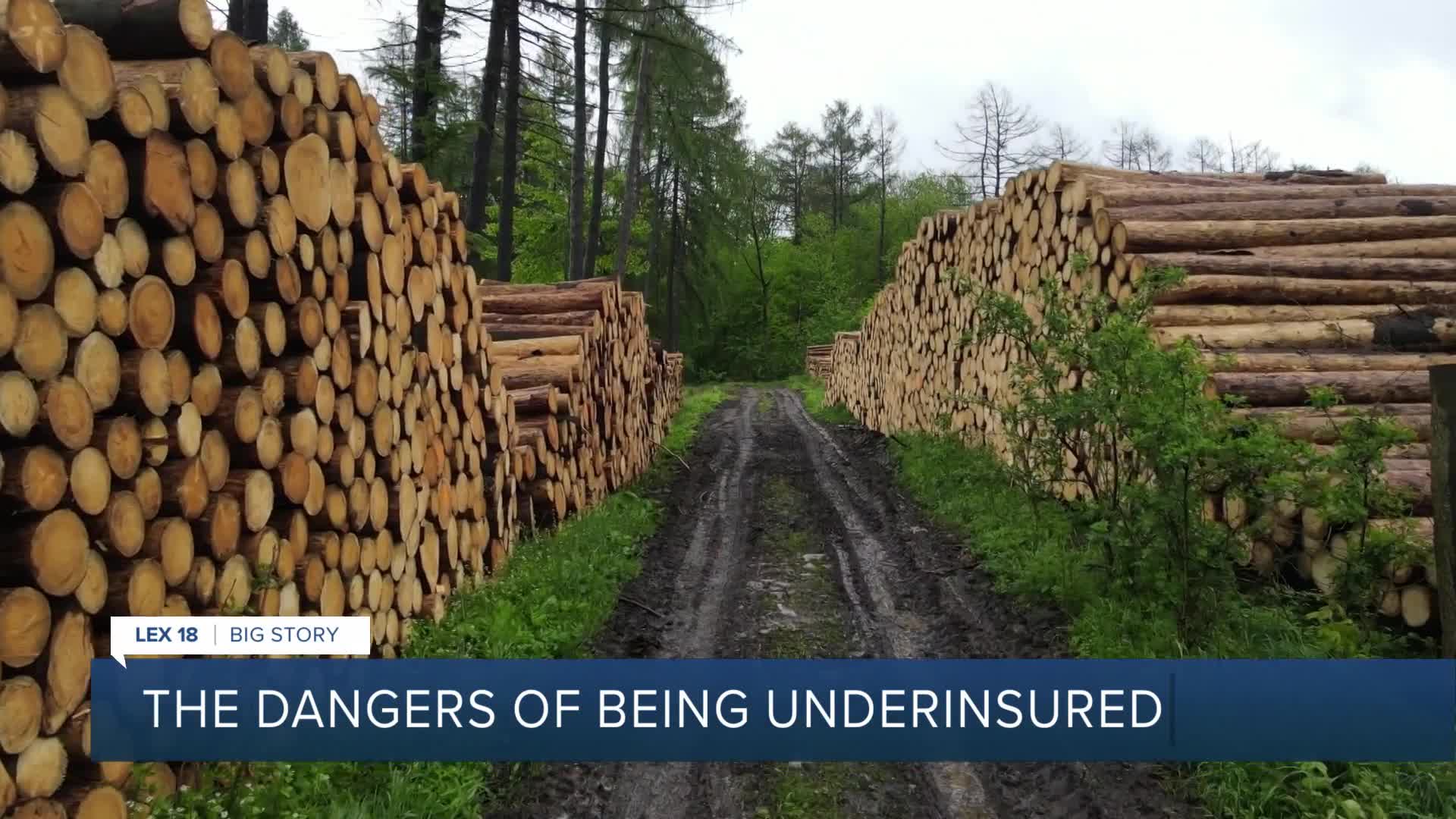


(LEX 18) — A decade of rising home prices across the United States has created new challenges for homeowners, particularly when it comes to adequate insurance coverage.
Nationwide, Zillow reports a 29% increase in home values since 2020, while Kentucky has seen some areas experience home sales increases of up to 50% since the pandemic began.
This dramatic rise in property values has put homeownership out of reach for many potential buyers, while existing homeowners face a critical challenge: ensuring their insurance coverage keeps pace with their home's current value.
David Thornton, a Lexington insurance agent who has been writing policies and helping local residents protect their property since 1983, warns there's trouble ahead for the insurance industry.
"I think there's very little understanding about why this is the sixth consecutive year the insurance industry has a 100 billion insured loss year," Thornton said.
The financial strain on insurance companies is evident in Kentucky, where companies willing to write homeowners policies are operating at a loss.
"Those companies who are willing to write homeowners policies in Kentucky are still sitting on a 107 loss ratio, meaning for every 100 dollars they bring in they're still paying out 107 dollars. Well, after 10 years that's just not a sustainable business model," Thornton said.
While rising insurance premiums are concerning, a bigger issue may be policies that haven't been updated to reflect current property values. A home worth $200,000 before the pandemic may now be valued at double that amount. If repairs or rebuilding become necessary, outdated insurance coverage may not cover the total cost.
"The thing we learned in a catastrophic event is the 60 percent of the homes in like a California fire, a western Kentucky tornado are grossly underinsured," Thornton said.
The problem is compounded by rising construction costs and labor shortages.
"So now we've got all these properties that have to be rebuilt and Canadian lumber goes up and we add tariffs on top of that and then we have border issues and a lot of our labor who was going to build those houses went home and they haven't returned," Thornton said.
Thornton encourages consumers to take time to evaluate their coverage and determine if they have adequate protection in case of emergency.
"Be willing to sit down and look at your total cost of risk mitigation, our home, your automobiles," Thornton said.
He recommends a comprehensive approach to managing insurance costs while maintaining adequate coverage.
"So the best thing to do is look at mitigation, use those protective devices, bundle as much of your insurance coverage as you can and be realistic with yourself. How much can I afford to handle on the front end? Don't use a $100 deductible. That was good in 1980. It's not so good today," Thornton said.
Thornton also applauds Kentucky leaders who are choosing to rebuild flooded homes on higher ground to avoid recurring costs. He hopes government officials and industry experts continue to think differently about how to insure families and homes.
