



(LEX 18) — A recent high-speed chase that ended in Fayette County prompted a closer look at what law enforcement officers experience during pursuits.
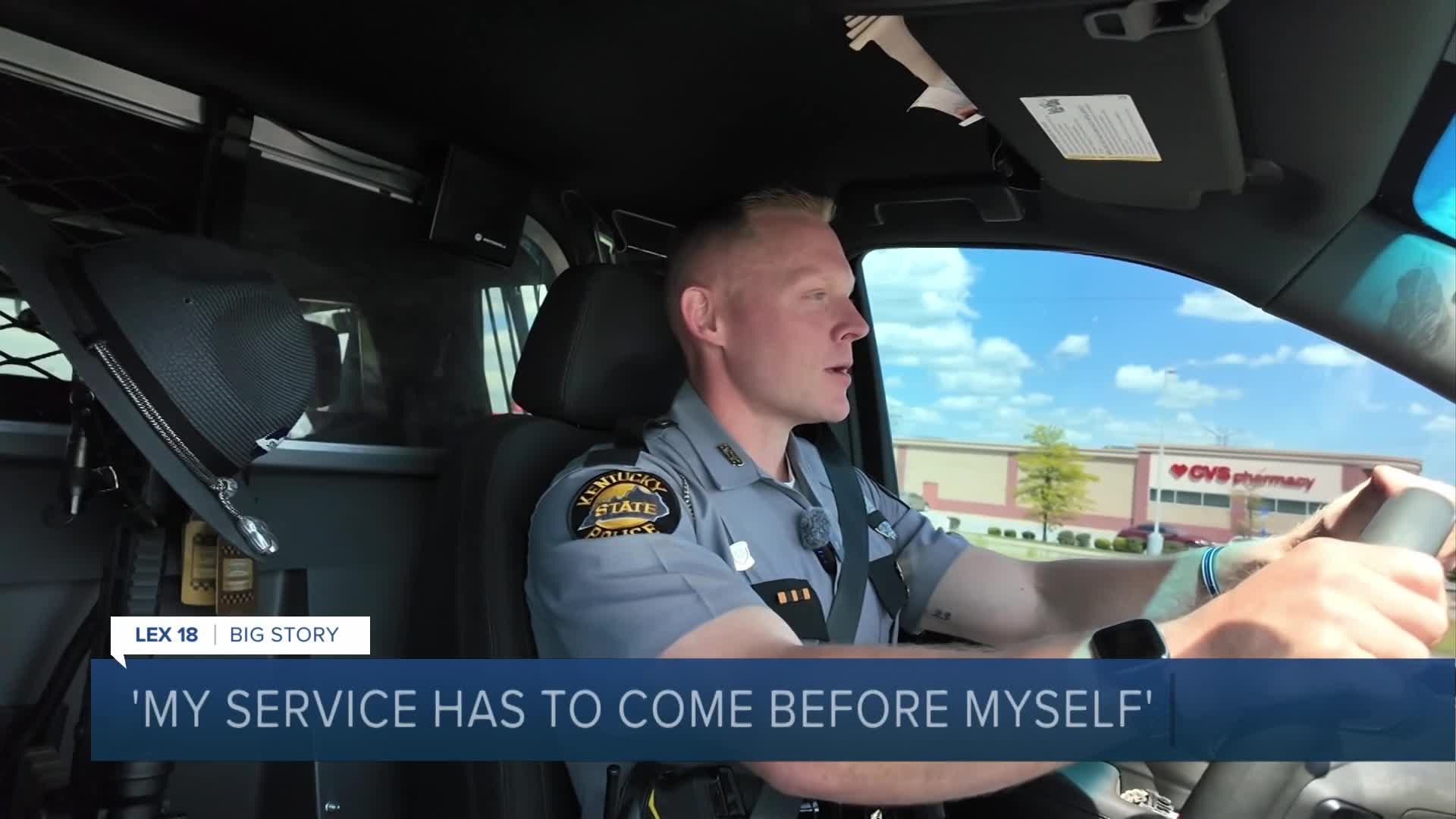
Kentucky State Police Trooper Andy Stepp spoke about the mental and physical demands of pursuits, the weight of the badge, and the safety calculations officers make in real time.
"We live in the realm of the unknown, and we have to react," Stepp said.
For Stepp, no pursuit is routine. He said suspects have a clear advantage from the start.
"They know where they're gonna go, and they don't care how they're gonna get there," Stepp said.
Training plays a central role in how troopers handle those moments. Stepp said officers must process multiple variables simultaneously while keeping the public's safety at the forefront.
"It's all about the attention to detail and having to multitask," Stepp said.
"You gotta be thinking ahead 2 or 3 steps ahead. I gotta be thinking about where I'm going and where I'm coming to. First and foremost most important thing to think about is the safety of the public," Stepp said. "You're having to make these split decisions."
Not every pursuit goes the same way. Depending on the risk level of a chase, authorities may pursue alternative methods to apprehend a suspect — but Stepp said that option is not always available.
"A higher charge, like say it's a violent felony, that definitely weighs into the factor of am I gonna pursue this car or am I not," Stepp said.
The dangers of pursuits are not abstract for Stepp. Officer Jason Cammack, part of Kentucky Vehicle Enforcement, lost control during a pursuit and crashed into a rock wall. Stepp said the memory of officers like Cammack shapes how he approaches the job — not out of fear, but out of respect.
Stepp said he approaches every shift with a sense of duty that goes beyond personal safety.
"I took an oath to do this job and to serve the public, so my service has to come before myself," Stepp said. "I'm at peace with my maker, and if it's my time to go, I'm going to a better place than where I'm at right now."
That mindset, he said, is what allows him to stay focused when the stakes are highest.
"If you start letting your thoughts cloud your judgment, you can't effectively be out here handling serious calls," Stepp said.
