




(LEX18) — Kentucky has the highest cancer incidence and mortality rate in the nation, and new data shows the state ranks sixth nationally for brain cancer.
More specifically, cases of diffuse intrinsic pontine glioma — known as DIPG — have increased over the last two years, with at least five cases appearing in Knox, Whitley, and Laurel counties.
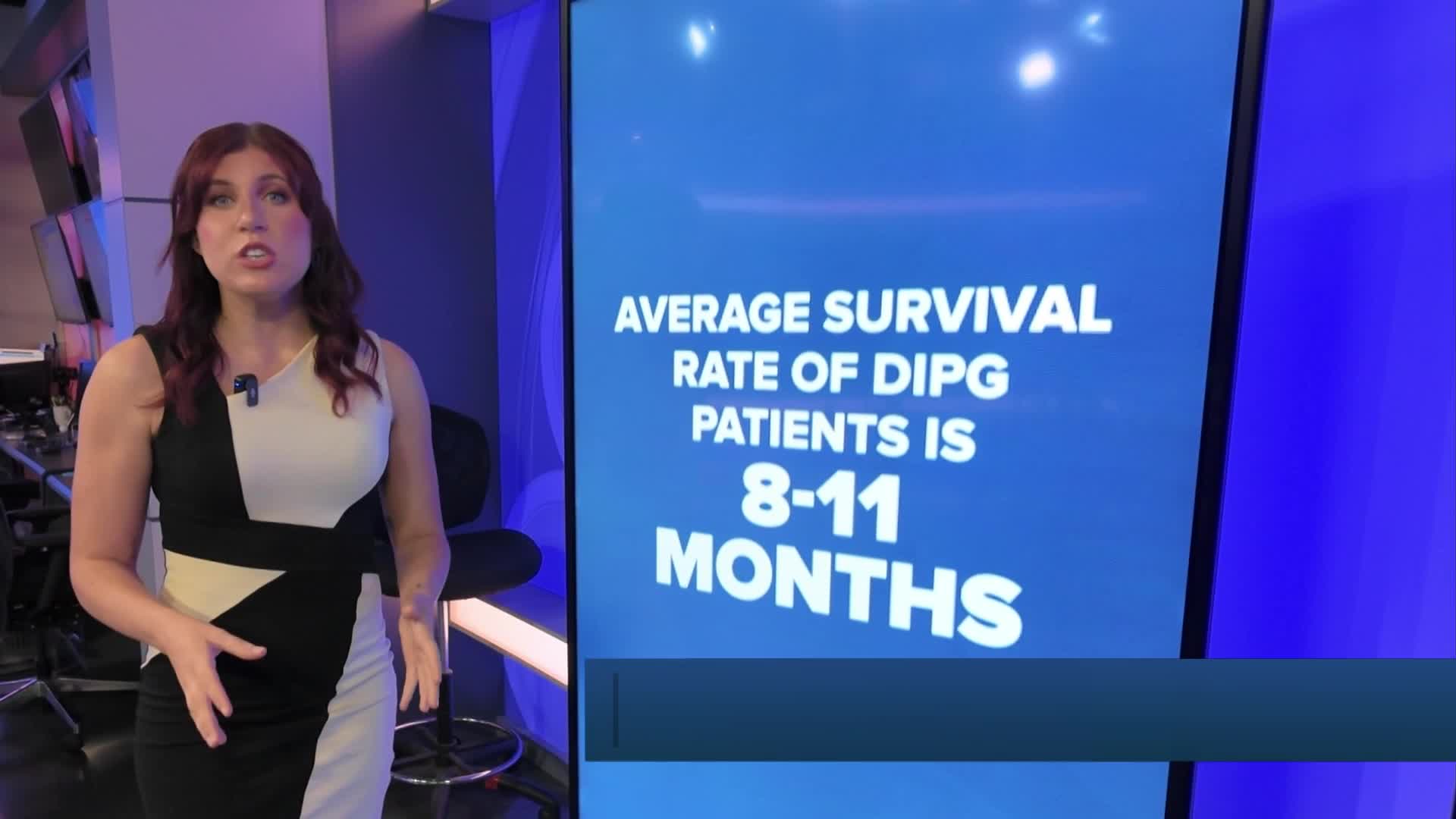
DIPG is a tumor that forms in a child's brain stem, causing severe weakness, vision loss, balance disruption, and breathing problems. Research shows the average survival rate for DIPG patients is between 8 and 11 months from diagnosis. Only 10% of patients live up to two years, and just 2% live up to five years.
Eric Durbin with the University of Kentucky Kentucky Cancer Registry said the Appalachian region as a whole shows elevated risk.
"We actually ran a comparison a few years ago where we looked at all of Appalachia, not just in Kentucky. But the entire Appalachian region and compared that to the rest of the US. And found there was a higher risk of developing brain tumors in the Appalachian region," Durbin said.
Durbin is working alongside health departments, the state, and several lawmakers to narrow down what is driving the increase. So far, environmental factors like water and soil do not appear to be the cause, and there is currently no evidence of a specific environmental exposure putting the community at risk.
"Unfortunately, I don't have necessarily a theory at this point as to why that may be occurring. We're examining for example the molecular makeup of tumors," Durbin said.
While the rising numbers are a concern, Durbin said communities should not panic.
"If you see an increase in childhood brain tumors it's concerning absolutely. But there's no evidence that a community needs to be worried about perhaps some environmental, particular environmental exposure, or that sort of thing," Durbin said.
