



Voters made history Tuesday, electing candidates who will become the first to hold some of the nation’s highest offices.
The victories crossed barriers of race, religion, gender and sexual orientation, changing not only which party holds power, but who has historically had the opportunity to hold it.
The breakthroughs came as Democrats made broad gains despite the party’s weak standing with the public. A Gallup poll released Oct. 13 found 43% of Americans viewed the Democratic Party favorably, while a majority viewed it unfavorably.
Some of the most significant firsts came in governors’ races.
In Georgia, Democrat Keisha Lance Bottoms became the first Black woman elected governor in U.S. history.
“This win is for all of us,” Bottoms said in her victory speech. “No matter who you voted for tonight, I will be a governor for all of Georgia.”
In New Mexico, Democrat Deb Haaland became the first Native American woman elected governor.
“Tonight, in our nation's 250th year, I stand before you as the first Native American woman elected governor in U.S. history,” Haaland said in her victory speech Tuesday.
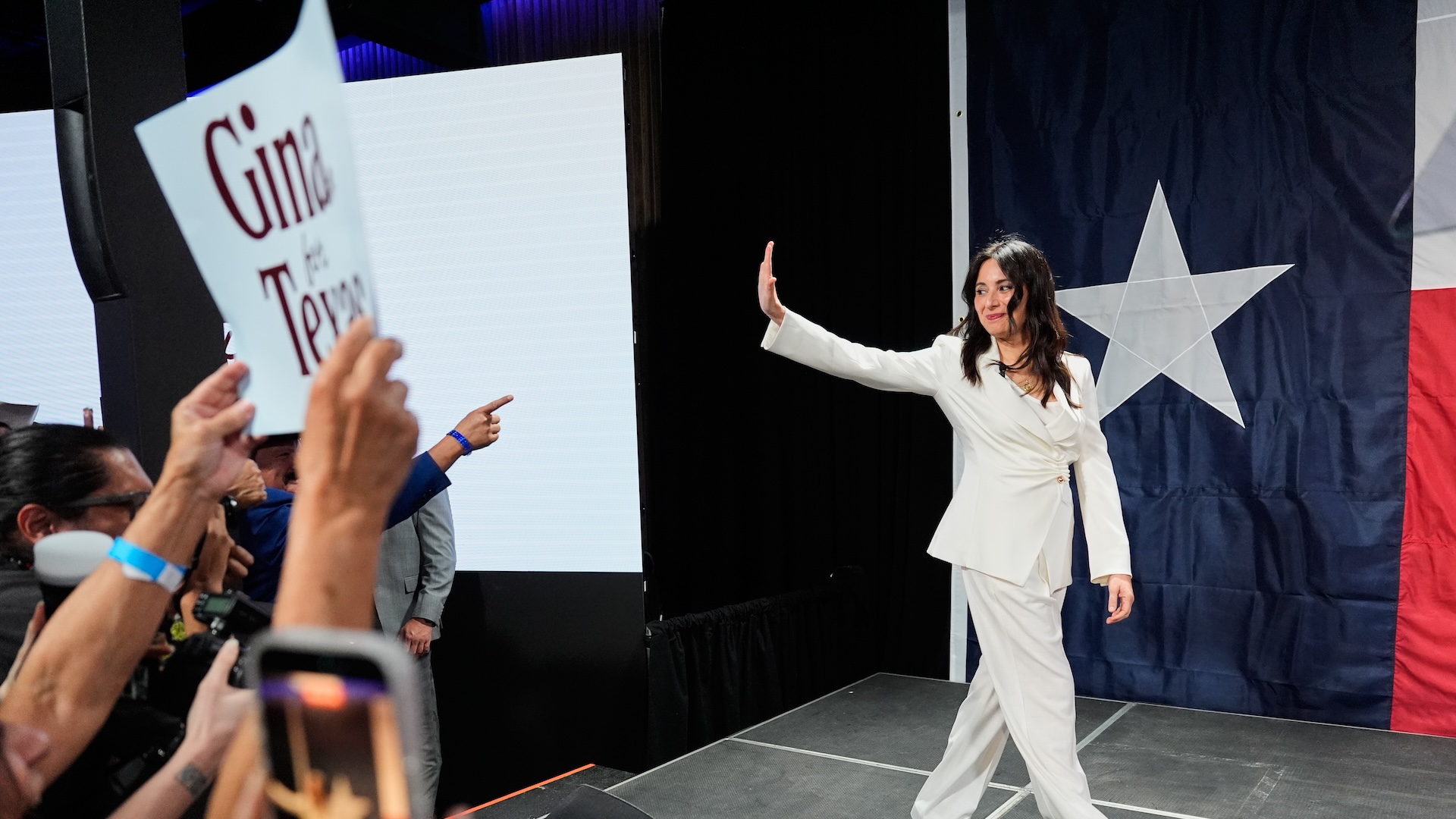
In Texas, which flipped from red to blue, Gina Hinojosa was elected as the state’s first Latina governor, while California elected its first elected Latino governor, Xavier Becerra.
A record five Black governors will serve at the same time. Wes Moore in Maryland, Byron Donalds in Florida, Bottoms in Georgia, David Crowley in Wisconsin and Aaron Ford in Nevada will hold their states’ top offices. Moore is currently the nation’s only sitting Black governor, but that will change in January.
The Senate delivered another series of firsts. In the battleground state of Michigan, Democrat Abdul El-Sayed will become the chamber’s first Muslim member, after a campaign in which his identity was frequently attacked by Republicans.
“To all the kids who watched this last month, to all the parents who struggled to explain why the president openly mocked someone for their name or how they pray, let them know tomorrow that the bad guys lost,” El-Sayed said.
Peggy Flanagan of Minnesota became the first Native American woman elected to the Senate. In her victory speech, she vowed to deliver on lower costs for families, end the Iran war, pass Medicare, and “rip ICE apart.”
“We know that people demanded more,” Flanagan said. “And for those of us elected in this moment, it is our duty to deliver.”
New Hampshire’s Chris Pappas, who became the first openly gay man elected to US Senate, told voter his win was a victory over the “broken status quo.”
“You said in a resounding voice that American needs a course correction; that Washington needs a new generation at the table to fix things,” Pappas said in his speech.
With Democrats regaining control of the House, another historic first could come in January. Rep. Hakeem Jeffries is in line to become the first Black speaker of the House. On Capitol Hill Wednesday, Jeffries told Scripps News, “It was a big night for the American people and a massive repudiation of MAGA extremism. We’re looking forward as House Democrats to getting to work.”
