



At the 2026 CES technology show in Las Vegas, robots are moving beyond sweeping floors or drawing crowds on a stage. Companies are debuting machines designed to cook, fold laundry and even interact with people in more human-like ways.
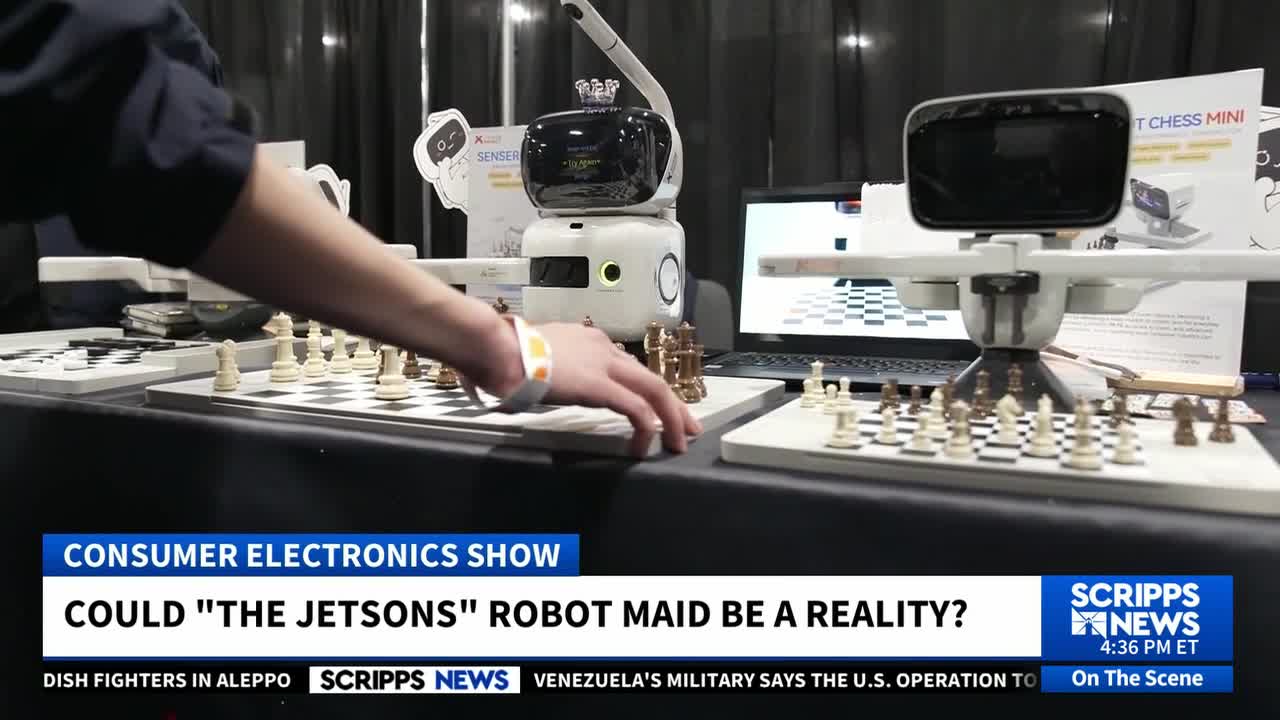
On the show floor, robotic devices range from potential chess partners to private chefs. One is NOSH, a robo-chef built to sit in a home kitchen, using artificial intelligence computer vision to ensure a meal is cooked to perfection.
RELATED STORY | Artificial intelligence expected to dominate CES 2026 in Las Vegas
LG is expanding what it calls “affectionate intelligence” with its new ClOiD home robot. The device is part of the company’s “zero labor home” vision, which imagines intelligent machines handling daily household tasks such as laundry.
While none of the robots on display would be mistaken for actual humans, companies are edging closer to that goal. XELA Robotics has developed U-Skin sensor technology to improve the dexterity of robotic hands.
"We don't want to replace humans, we want to assist humans," said Alexander Schmitz, CEO of XELA Robotics. "There are many tasks where it's very hard for humans to do them."
IN CASE YOU MISSED IT | A tiny robot completed the first remote-controlled surgery in space
Still, humanoid robotics faces major hurdles as the machines can be slow, energy-inefficient and costly. Experts also point to ethical and safety concerns over technology that can track human patterns.
Some of the robots at CES are already in use or being tested in kitchens and warehouses, while others remain years away from entering the market. For now, the future of robotics will arrive in pieces — with timelines as varied as the machines themselves.
WATCH | Could AI predict when you'll die?
