

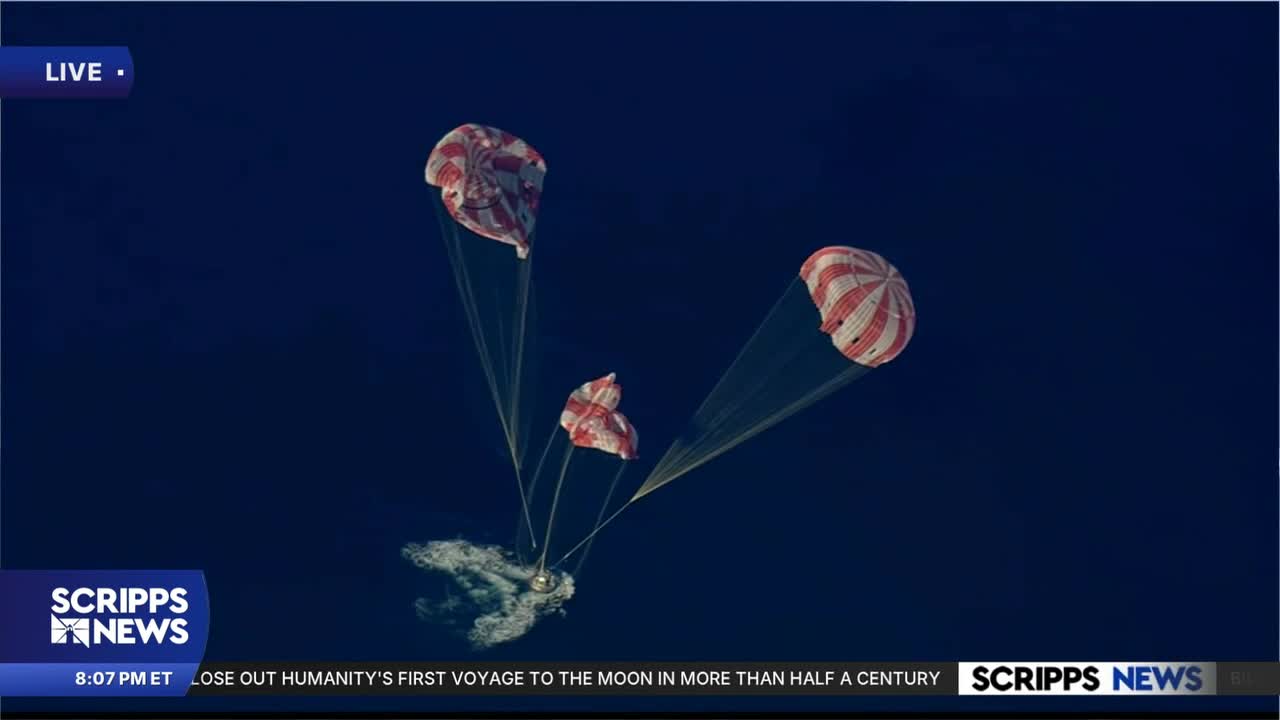


The Artemis II crew splashed down off the coast of San Diego just after 8:07 p.m. Eastern Time, ending a historic nine-plus-day mission that included a lunar flyby.
The Orion spacecraft carried astronauts Reid Wiseman, Victor Glover, Christina Koch and Jeremy Hansen.
The reentry and splashdown proceeded as planned, according to NASA.
A large recovery operation began shortly after splashdown. Recovery teams worked to establish satellite phone communication with the spacrecraft, open its egress hatch and deploy a floating stabilizer to aid in extracting the crew to a recovery helicopter.
The astronauts were taken by helicopter to the USS John P. Murtha to undergo post-mission medical evaluations, before they return to shore and travel to Johnson Space Center in Houston.
IN CASE YOU MISSED IT | New reentry strategy guides Artemis II’s historic return to Earth
Earlier in the day, the Orion spacecraft entered Earth’s atmosphere at about 25,000 mph and endured temperatures reaching roughly 5,000 degrees Fahrenheit before descending into the Pacific Ocean.
A six-minute blackout period cut off contact with the spacecraft and crew during reentry, due to interference from superheated plasma that built up around the capsule as it descended through the atmosphere at more than 25,000 miles per hour.
NASA visually tracked the spacecraft during this period using airborne cameras near the splashdown site. Radio contact was reestablished on schedule and the crew reported a successful touchdown in the water.
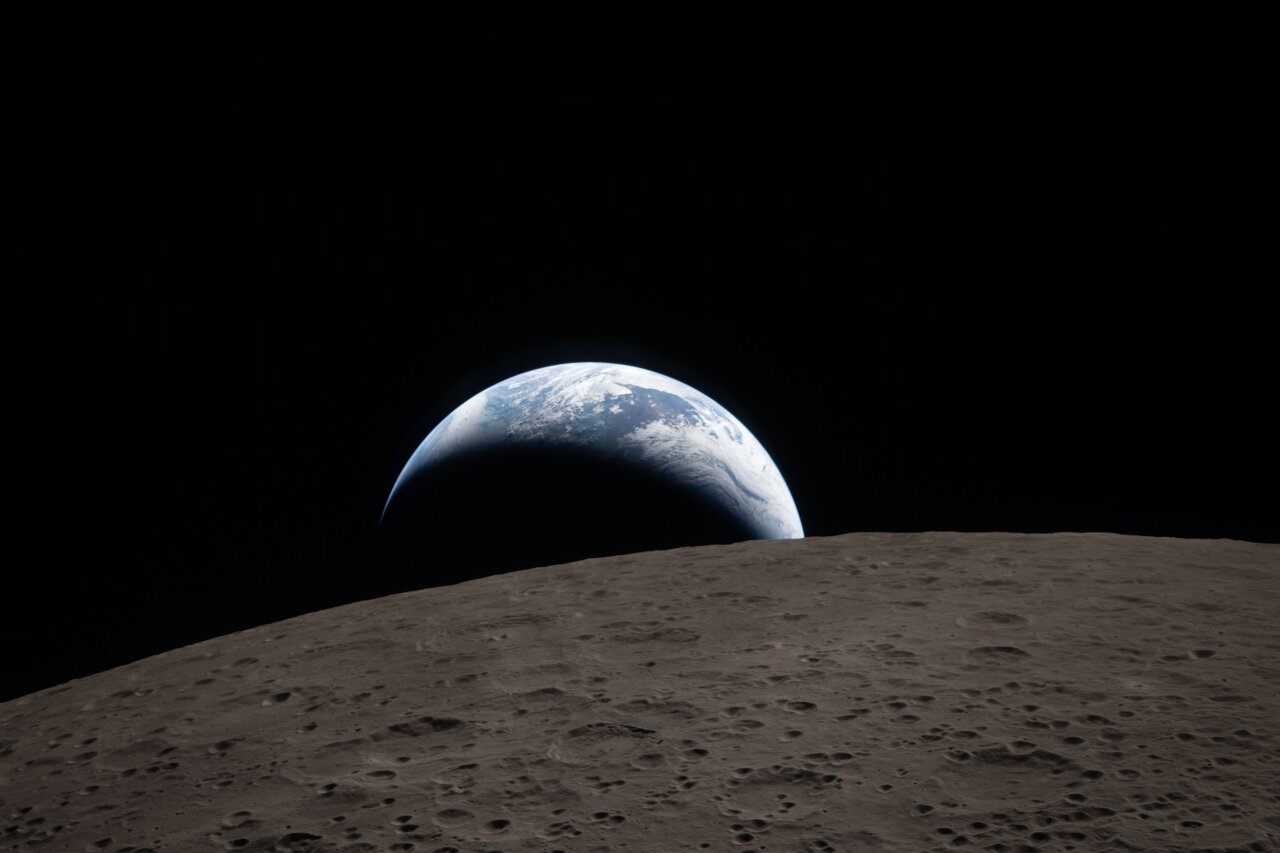
Artemis II launched from Kennedy Space Center on April 1. During the mission, the astronauts traveled farther from Earth than any humans before them, capturing new views of the moon during their flyby and a striking Earthrise.
