

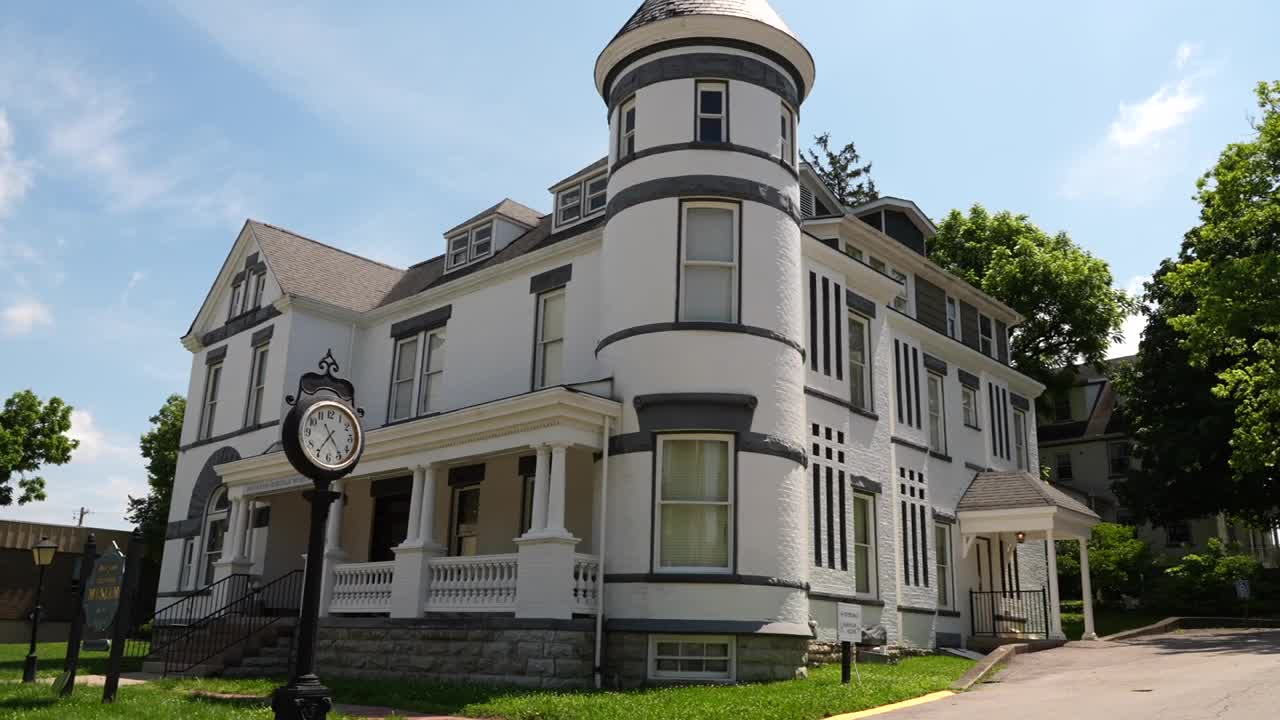


WINCHESTER, Ky. (LEX NEWS) — The Bluegrass Heritage Museum offers details of Clark County’s past but has a unique story of its own.
Sitting just a few steps away from downtown Winchester on Main Street, the former family home once stood as a beacon for eastern Kentuckians looking to get well.
A local doctor spent two years building the 10,000 square foot home in the 1890s. While it served as a luxurious home for his family, it turned out to be the perfect spot for a local hospital.
“When he passed away, he left the building to his son, and his son wanted to sell the building,” said Sandy Stultz, who serves as the museum’s executive director. “So Dr. E.P. Grant was looking for a place for a hospital, so he bought the building and turned it into a hospital in 1927.”
That’s right! The Bluegrass Heritage Museum was at one time a 14-bed hospital. A destination for rural Kentuckians for decades.

“A lot of the patients were what we call mission patients. They didn't have to pay, because it was supported by the Presbyterian ministry,” said Stultz. “So all over southeastern Kentucky, all over central Kentucky, the Presbyterian churches would give money to make sure that this hospital was able to, to see patients and take care of them.”
Local historians, led by Stultz, took over the building two decades ago and created the museum. It details the county’s place in our nation’s war dating back to 1812, as well as its history of its cash crops of tobacco and hemp. There was also a large turkey processing plant that was so successful, it once supplied birds to most of the country.
Stultz points out a room full of antique telephones, “At one time Winchester was like the big hub for all of South Central United States here with the telephone, so we have a lot of things. We have telephone poles and wires and telephone booths. Yesterday, we were teaching children how to do the rotary dial.”
There is an operating room on the third floor with the actual equipment used in the hospital during the 1950s. Wooden cribs that still intact after providing comfort to countless babies over the generations. Even a 1930s version of a refrigerator – still in use – and a kitchen stove.
Hundreds of items across three floors and spanning more than two centuries.
“It's just important to preserve our history, you know,” Stultz said. “If we don't preserve it, it's going to get lost. I'm a former history teacher, and I understand that very well. You know, I would have to take my children someplace else to see a museum. Now, they can bring their children here to see a museum.

