



ANDERSON COUNTY, Ky. (LEX 18) — Tucked away in rural Anderson County, Little Crooked Creek Safari is giving visitors a chance to get closer to animals than most traditional zoos ever allow.
Owner Eric Swisher said the safari spans 35 acres, with 24 acres dedicated to the zoo. The facility is home to a wide range of animals, from guinea pigs and porcupines to sloths, capybaras and a 2,000-pound Eland bull — the largest antelope in the world — all of which visitors can hand-feed or interact with up close.
Swisher said the idea grew out of a lifelong love of animals and a dream of country living.
"When I was a kid, I just liked animals and I grew up in the city," Swisher said. "Knew I wanted to be in the country. It just took me a while to get there, so about maybe 23 years ago, I finally moved out to the country and then a few years later after that I just started to build a zoo in my backyard."
Building the safari has not come without challenges. Swisher said the biggest hurdles have been financial and logistical, from laying roads and constructing buildings to running water, heat and electricity across the property.
"It's just a long process," Swisher said. "That's probably the most biggest problem to overcome, but if you have a desire to do something and you just wanna build something, you can do it."
Hands-on encounters set it apart
What draws visitors from across the region, Swisher said, is the opportunity for direct interaction with animals that have been hand-raised and are comfortable around people.
"We do a lot of sloth encounters and capybara encounters," Swisher said. "People come from all over just to sit with our capybara and to feed them. Most of all of our animals are hand raised too, so they're friendly, so that they can have that — the animals are not scared of them. They're more used to people than, say, most animals."
Capybara encounters are among the most requested experiences at the safari.
"I get phone calls every day — are you gonna be doing capybara encounters today?" Swisher said. "And I say, yeah, come on out."
The safari also features a guinea pig pit where children can sit and feed guinea pigs, including a section dedicated to newborn animals.
Swisher said the reaction from visitors has been the biggest surprise since opening.
"It sounds a little cliche, but people generally have a good time," Swisher said. "People come here and they just have such a hands-on experience, and I've talked to so many people that literally cry tears of joy just to be next to this sloth and just to touch them. I hear the word bucket list all the time."
Inside the sloth enclosure
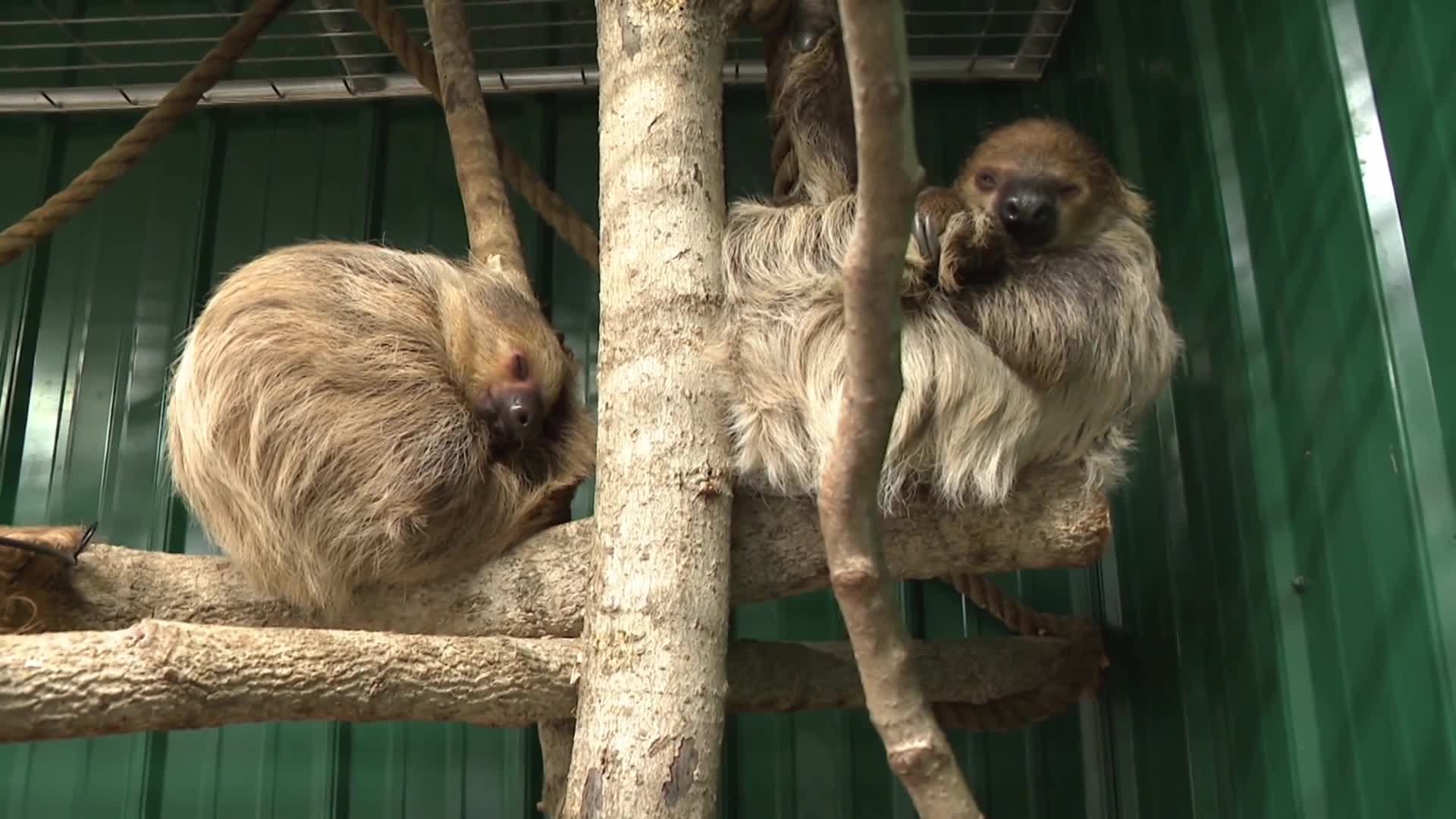
One of the most popular stops at the safari is the sloth enclosure, home to a male and female sloth named Odell and Josie. Swisher said both were born in South America and imported for conservation and educational purposes.
The enclosure is kept at approximately 86 degrees with controlled humidity levels to replicate the sloths' natural rainforest habitat.
"They have to have it warm, like a rainforest," Swisher said.
Sloths sleep about 20 hours a day, Swisher said, because of their slow metabolism. But he noted they are not as defenseless as they might appear.
"People think sloths are slow, but actually they can swing their hand just as fast as you can if they're trying to defend themselves against a predator," Swisher said. "Because they go from the canopy of the forest down to the floor to use the restroom once a week, and a lot of times that's when they get eaten by other animals, so they can definitely defend themselves."
Winter accommodations for African animals
During colder months, some animals that typically live outdoors are brought inside. The safari's porcupines, which are originally from Africa, are among those moved indoors during winter.
Swisher said one of the male porcupines has developed a habit of dancing when visitors come to feed him — a behavior he picked up after spending his life in a petting zoo environment.
"He's learned this little thing to dance around whenever people come in to feed him. He just gets excited," Swisher said. "The females don't do it, but it's definitely his gig."
While porcupines are resilient enough to handle varied climates, Swisher said he prefers to keep them comfortable indoors during the winter.
Swisher said the safari's approach is intentionally different from what visitors might find at a conventional zoo.
"Most zoos today are geared to making sure that you can't see the animal," Swisher said. "Of course we want the animal to be secure and feel good and to be comfortable in its environment, but we try to also make it so that you can have a close proximity to them, get to experience them in a safe way for everybody."
Plan your visit
Little Crooked Creek Safari is located at 1430 Little Crooked Creek Rd. in Lawrenceburg, Kentucky 40342.
The safari is open Saturdays from 10 a.m. to 5 p.m. and Sundays from 2 p.m. to 5 p.m. The safari may occasionally be open on Fridays. Visitors should check the safari's Facebook page for the most up-to-date schedule information.
