



GARRARD COUNTY, Ky. (LEX 18) — As 2026 gets underway, LEX 18 sat down with Kentucky Agriculture Commissioner Jonathan Shell to reflect on the challenges of 2025 and outline his priorities for the year ahead.
From his farm in Garrard County, Shell said he’s uniquely positioned to speak on the state of agriculture, an industry he experiences daily.
Reflecting on 2025
Looking back, Shell said economic pressures and trade policy dominated much of the conversation in 2025.
“I think for me, the biggest challenge we faced in 2025 was correcting so many of the problems we developed in the previous four years under the Biden administration,” Shell said. “From extreme inflation to extreme problems around the world like a lack of respect for American farmers in restructuring how we do tariff and international trade."
Shell said policymakers are beginning to understand what he describes as a choke hold markets have had on farmers, adding that he believes trade deals are being corrected.
In 2025, LEX 18 also heard from farmers who said trade under the current administration created uncertainty. While bridge relief payments provided temporary help, frustration grew over continued reliance on Washington.
Shell acknowledged that concern, saying subsidies are not a permanent solution.
“If we're gonna continue to have farms that are operating in Kentucky and markets available, these bridge payments are important, but they are absolutely just a Band-Aid," he said. "They are not a long-term fix. What we need to make sure is that we're correcting issues, and we need to open up the markets so that our farmers have the ability to sell their products."
Strengthening Kentucky’s ag economy
As part of that long-term strategy, Shell highlighted the creation of the Agriculture Economic Development Board in 2025, aimed at strengthening the state’s agricultural economy.
“What we're working on is to create extreme value in all the things that we work on in agriculture — all the commodities and our Kentucky Proud products, so that consumers can know where their food's coming from, get directly connected with it, but then also our farmers have the ability to have these strong markets available so that they can really see some profitability,” Shell said.
Profitability, he said, is central to his 2026 agenda — particularly efforts to connect Kentucky-grown products more directly with Kentucky consumers.
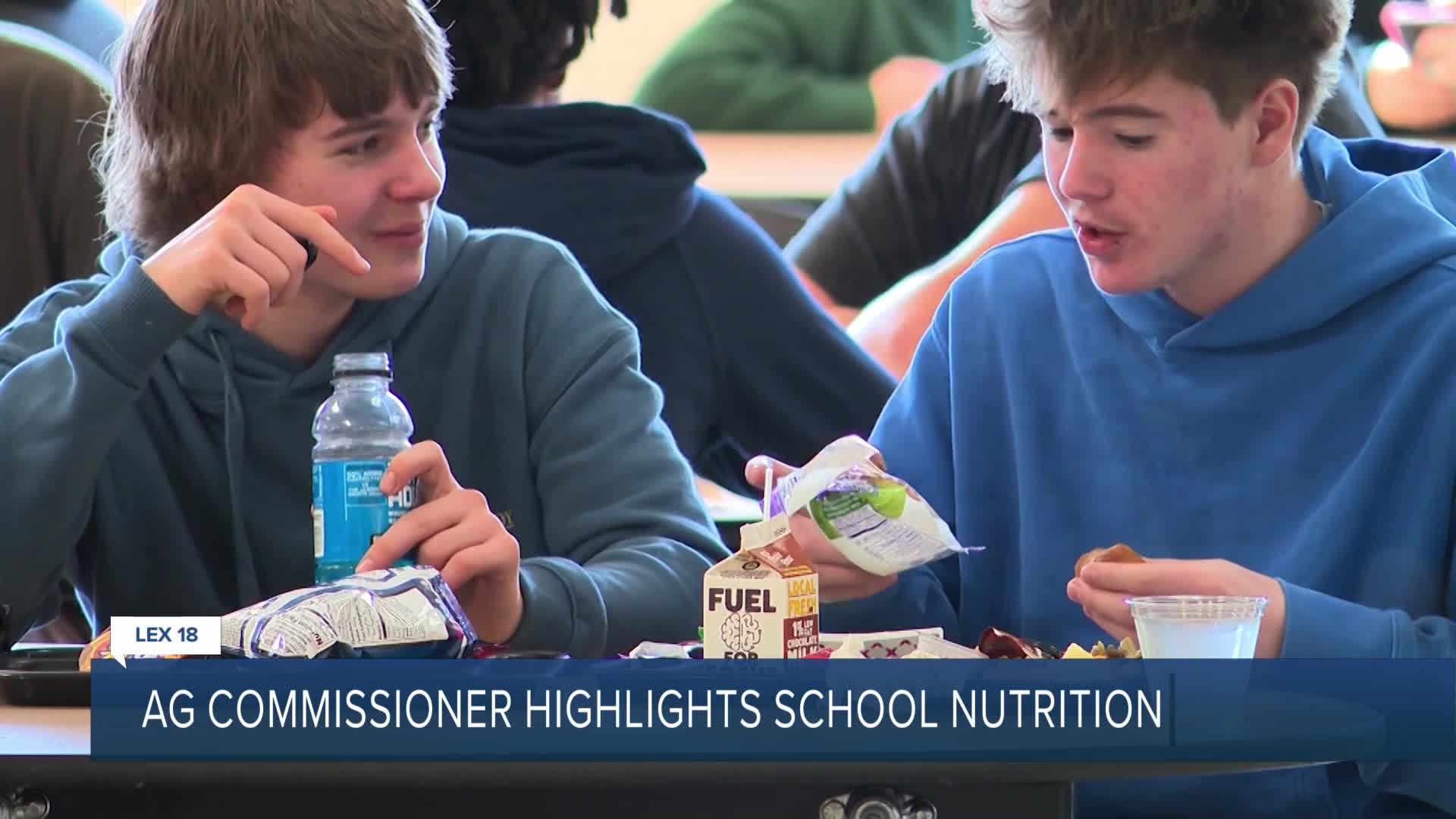
Shell said he is fine-tuning the state’s farm-to-cafeteria program for schools. The Department of Agriculture is partnering with the Department of Education and school districts statewide to make farm-to-school partnerships more routine by addressing cost, sourcing and procurement — allowing schools to more easily buy local products while helping farmers remain profitable.
In that effort, he’s backing Senate Bill 5, which aims to remove barriers that have historically made it difficult for schools to purchase Kentucky-grown food.
The Department of Agriculture will also expand the Food Is Medicine initiative, which places local food in hospital cafeterias and post-patient care settings.
“We have seen hospitals go from 11% to 25% in local consumption year over year, just in one year. We have somewhere around 68 to 70 hospitals of 129 that are onboarded with Food Is Medicine programming. We're expecting this spring for it to absolutely burst wide open,” Shell said.
Expanding agritourism
Another focus for 2026 is agritourism, which Shell sees as an opportunity to showcase Kentucky agriculture while driving economic growth.
“Where I believe we can really thrive is in that three-day trip, pulling travelers off the interstate, we're perfectly suited and situated in Kentucky agriculture to be able to do that with farmstays, to be able to do that with our fall markets, to be able to do that with things like greenhouse operations and beautification.”
Looking back at 2025 and ahead to 2026, Shell said Kentucky farmers remain the foundation of the state’s agricultural economy.
“They're gonna find a way to be successful. What we have to do on the policymaker's side is not to choke them out, to not put barriers in their way and to get these things in the right way for the markets available for them so that they can thrive on their own,” Shell said.
