



(LEX NEWS) — A deadly tick-borne disease is affecting domesticated cats in Kentucky, and veterinarians report an influx in cases this year as opposed to other years.
Bobcat fever, also known as cytaux, originates in bobcats but has increasingly been found in domesticated cats — typically those that spend at least some time outdoors.
Dr. Sydney Prince Holland at Advanced Animal Care's Berea and emergency locations states the disease is extremely dangerous.
"It's very dangerous. Without treatment, it is considered fatal. Even with aggressive treatment and [if] it's caught in the early stages, the prognosis is still guarded to poor," Holland said.
Typical signs of bobcat fever include high fever, jaundice, lethargy, dehydration, and lack of appetite.
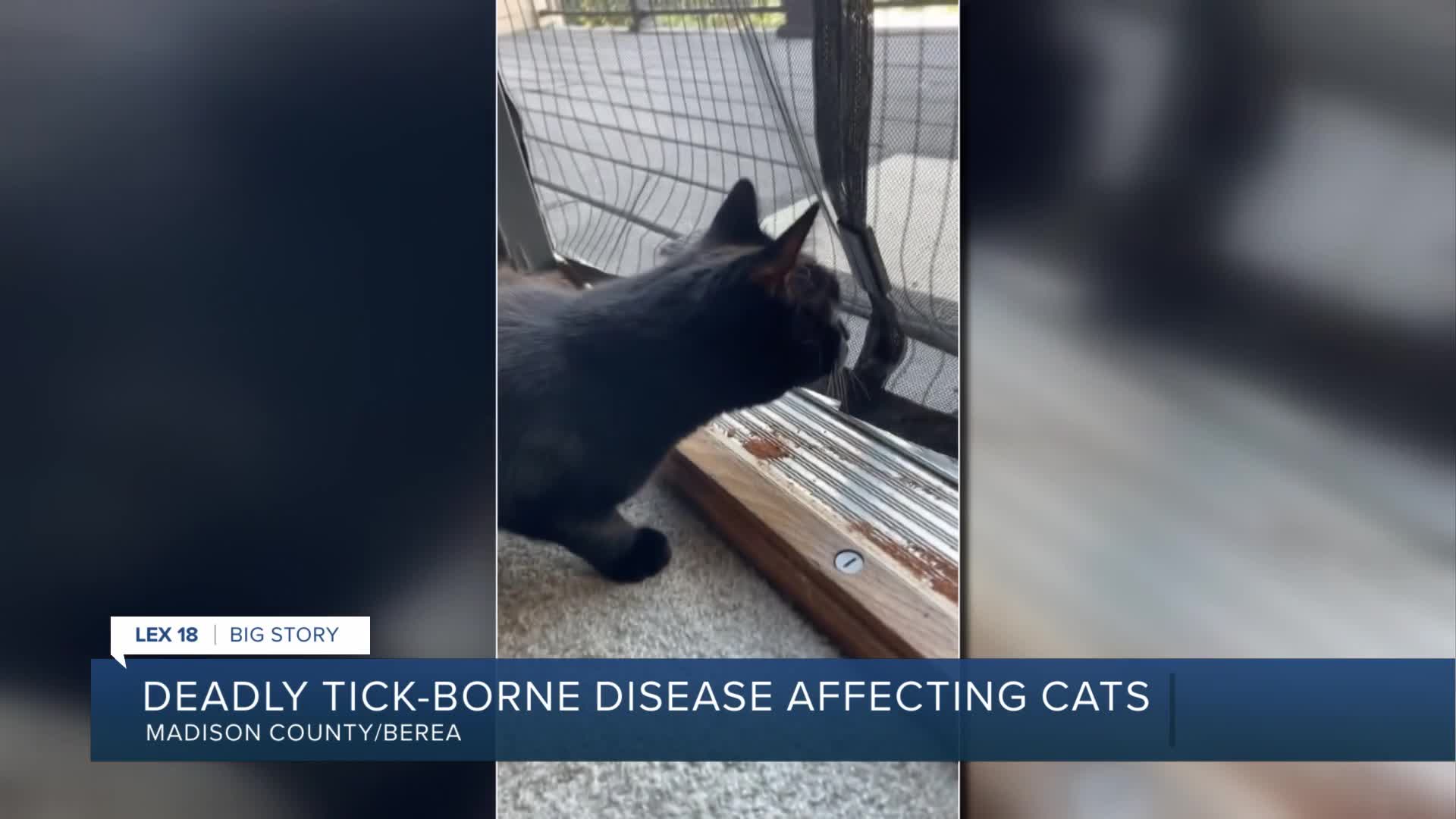
Vet tech Amy Baxter noticed something was wrong with her barn cat, Dolly Parton — Dolly for short — when the cat refused to eat.
"A few weeks ago, I was out feeding. All the cats came to eat dinner, and four out of five wanted to eat. Dolly did not. She looked at her food and then she looked up and walked away from it, and that is not common at all for this cat," Baxter said.
Baxter brought Dolly to the vet immediately, where bloodwork led to a quick diagnosis.
"We came down, did some bloodwork, and we had a diagnosis almost immediately," Baxter said.
Catching the disease early saved Dolly's life.
"I'm thrilled. this is our favorite barn cat, so we are just — we're thrilled," Baxter said.
Holland recommends year-round flea and tick prevention for all cats, especially those that spend time outdoors.
"If you have a cat that is indoor/outdoor, or outdoor primarily, or even a cat that is indoor, keeping them on a flea and tick prevention year-round in Kentucky. There is no true 'tick season' anymore. It is all year round," Holland said.
If you find a tick on your cat, monitor them closely for symptoms. If your cat displays any signs of bobcat fever, veterinarians recommend taking them to a vet immediately.
