

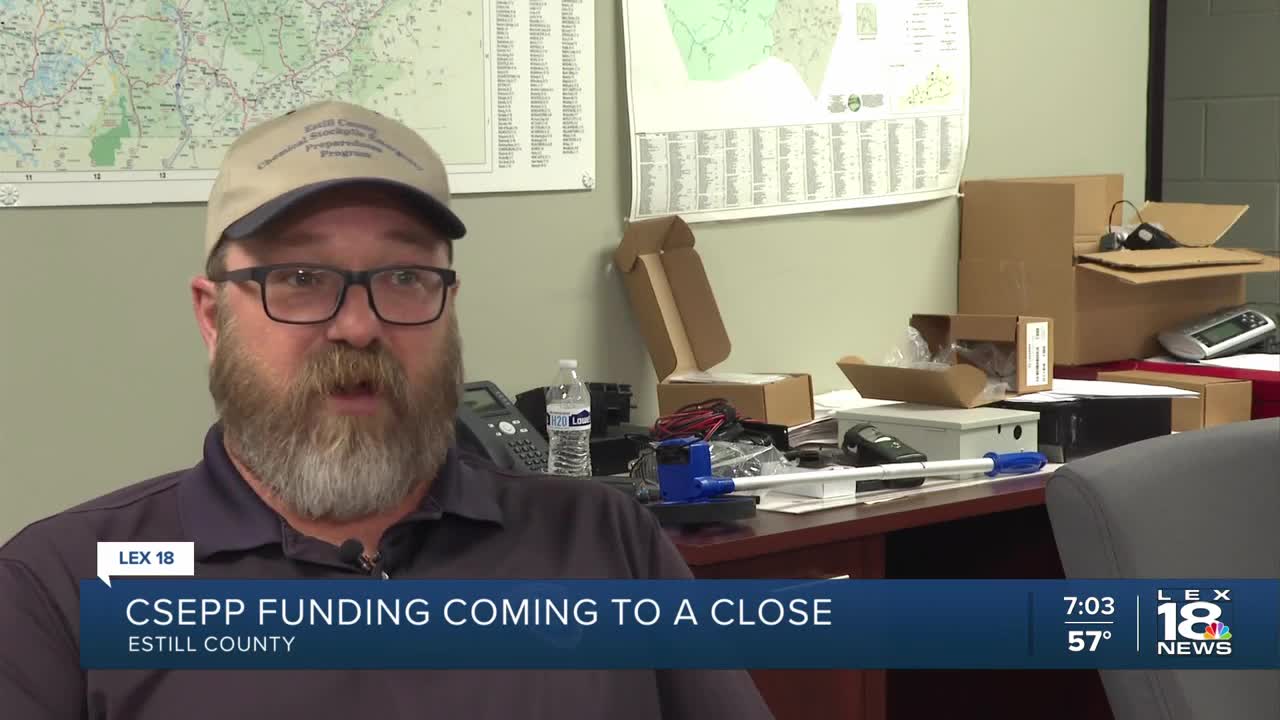


IRVINE, Ky. (LEX 18) — Since 1985, a federal emergency preparedness program has helped fun emergency management agencies in 10 central Kentucky counties near the Blue Grass Army Depot. Now that chemical weapon destruction is complete at the facility, those funds are going away.
The lack of funding is going to have an impact in places like Estill County. Director of Emergency Management Ronnie Riddell said without the funding, he doesn’t have the help he used to.
“My emergency management staff went from 5 or 6 to me,” Riddell said.
That lack of staff is already having an impact, including the amount of information Riddell can give the public.
“We've had a huge presence on social media and things like that,” Riddell said. “It'll affect how I can communicate with the community.”
The major downsize is due to the lack of funding following the end of CSEPP.
“We knew, uh, over the last few years that it was winding down,” Riddell said. “They were getting closer and closer.”
CSEPP, or the Chemical Stockpile Emergency Preparedness Program, were established in Madison, Estill, Clark, Fayette, Garrard, Jackson, Powell, Rockcastle, Jessamine, and Laurel Counties. The program was designed to respond if a disaster were to occur at the Blue Grass Army Depot.
“The goal was always to support the destruction operations over at the Blue Grass Army Depot,” Riddell said. “In that aspect it's kind of bittersweet because the mission is accomplished. As a result of that mission being accomplished, the funding goes away and will have a definite effect on these communities.”
CSEPP provisions helped the public and first responders prepare for emergencies ranging from a chemical mishap at BGAD to natural disasters, as well as helped purchase and pay for equipment.
“They built this building, the our emergency operations and telecommunications center and buildings in the surrounding counties,” Riddell said.
According to Estill County Judge/Executive Donnie Watson, the funding also paid for fire trucks and other county equipment.
“Now that's all gone,” Riddell said. “Tomorrow if we have something catastrophic happened with the system, then the county has to figure out a way to pay for that.”
For the moment, Watson assured that the county will figure out its financials.
"We've got to kind of restructure some things, but we're okay financially," Watson said. "We'll survive.”
While the emergency management staff has been reduced to just Riddell, he shared that dispatchers hired through the CSEPP process will stay on as well.
The impacts of the funding cuts may seen minor, but Riddell said decisions will have to be made if and when the EMA needs new equipment.
“Whenever you have something happen and something like that breaks, the county has to say, ‘Hey, can we even do this?’ Riddell said. “As it stands right now, that's the future is, and at some point there will be some difficult decisions that have to be made.”
Aside from funding equipment, CSEPP also helped counties with resources to prepare leaders and people for natural or man made disasters. Despite CSEPP coming to an end, Riddell says people in Estill County can still do their part in staying prepared.
“We've kind of been in this readiness stance for so long,” Riddell said. “I would just ask people to continue that preparedness mindset. Pay attention, know what's going on, especially with the weather, because that's the most likely thing to affect you.”
