

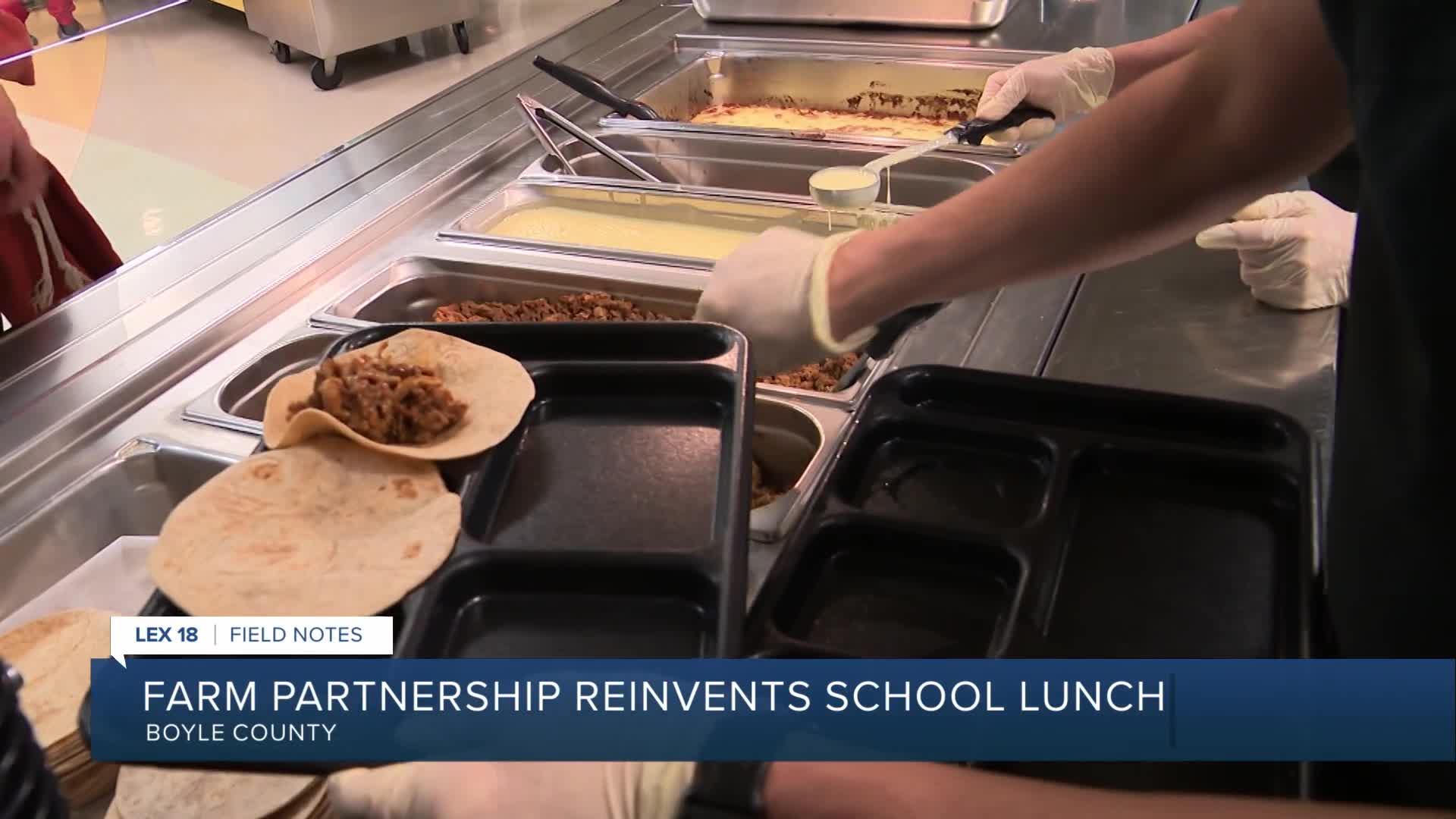


DANVILLE, Ky. (LEX 18) — The days of rectangle pizza and processed fruit cups are dwindling in Kentucky schools. Since the pandemic, federal grants helped schools across the state buy locally grown produce and meat, transforming school meals. At Boyle County High School, even with less federal help now, the push to serve balanced, locally sourced meals is stronger than ever.
"Most days, honestly, I'm gonna give it a good 9.5. It's pretty good," said sophomore Nora Coleman, showcasing the fajitas and street tacos on the menu when LEX 18 stopped by.
Boyle County School District Food Service Director Cheyenne Barsotti welcomes the positive feedback from students.
"I love it because I know that means they're enjoying it," Barsotti said.
While USDA meal guidelines haven't changed, the menu has transformed with colorful, flavorful options that differ significantly from what Barsotti remembers as a former Boyle County student. To satisfy both federal rules and teenage taste buds, her staff often cooks from scratch, tests new recipes, and prioritizes locally grown food where possible.
"We do prioritize those center-of-the-plate items, so items like beef that are going to feature as an entree, as a director, I prioritize that because I know the quality is noticeable when you buy the local product, and I think our kids notice that as well," Barsotti said.
Circle G Farms, a diversified agricultural operation located just seven miles away, provides much of that local beef. The farm operates on a sustainable model where they raise crops to feed their cattle, cut their own hay and use manure to fertilize their fields.
"That's the origin of Circle G Farms," explained Carly Guinn. "We try to utilize every division of our farm to its highest potential and keep it sustainable."
Spencer and Carly Guinn's partnership with Boyle County schools began several years ago when the farm started selling produce to the district's summer feeding program. The relationship has grown, and today their beef often serves as that "center of the plate" protein.
"It's one thing to hear it from your kids, but it's when their friends come up to us and say 'We had the sweet potatoes' or 'We had tacos at school'…it's really satisfying, that full circle moment where we can see our products going into making the community better, and we're just one of the farmers doing that," Spencer said.
"I think as parents it's okay to question, 'Where does that come from?' and I think more schools are doing more than what you think and providing more local food than you realize," Carly said.
Across Kentucky, nearly 150 farms sell to more than 90 school districts. For more than a decade, the Kentucky Department of Agriculture has connected farms to schools, assisting with crop planning, preparation and business development. According to the KDA, schools are some of the largest and most consistent buyers of locally grown meat and produce.
"We know that when they're able to purchase from us, they will, and we are ready to supply them with what they need whenever they're ready," Carly said.
From November 2022 through April 2025, pandemic-era federal grant funding made it easier for Kentucky schools to buy local. Kentucky received a $3.2 million Local Foods for Schools grant that helped connect about 140 farmers with school districts. In 2025, the USDA halted additional funding for the next round of the program, and those grant dollars wound down, tightening budgets for future purchases.
"It is hard, you have to evaluate what you think you'll get your most bang for your buck with now that the grant is no longer active," said Barsotti. "We just have to say, 'These are the items that are worth it,.'"
Even without the same level of funding, many farm-to-school partnerships have continued. Food service directors buy local when they can, and producers say seeing students eat what they raise makes the work worthwhile.
"I hear a lot of people say 'You farm, we eat,' but we take it a step further and say, 'We get to farm because you eat,' because there is no way we could do what we're doing if the community weren't involved with us," Spencer said.
The Kentucky Department of Agriculture says it's committed to finding solutions that bring more local foods into cafeterias while providing economic benefits to local producers.
Producers interested in Farm to School can contact the KDA and learn more here.
