

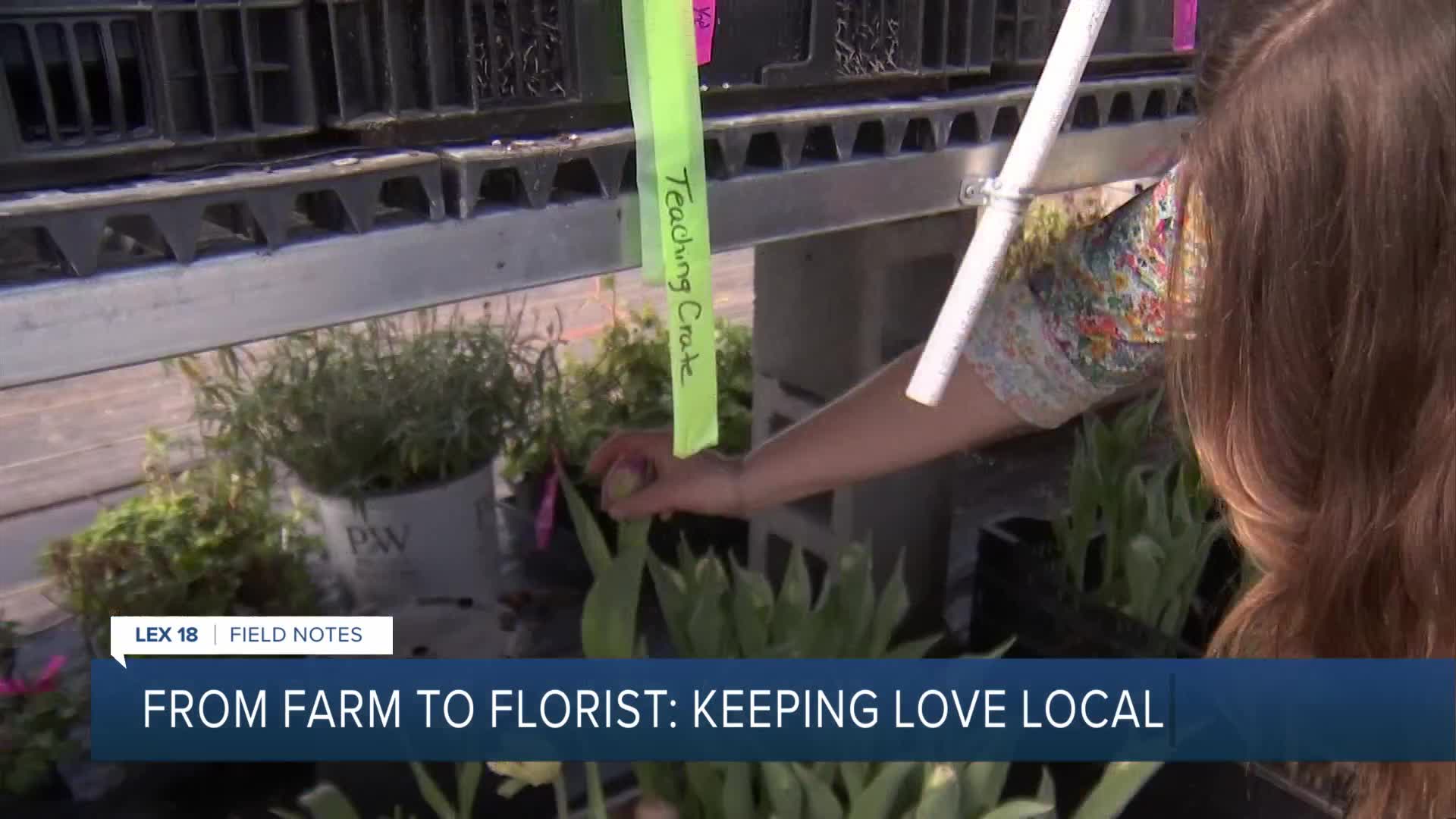


HARRODSBURG, Ky. (LEX 18) — When you order flowers for your sweetheart this Valentine's Day, chances are those blooms traveled far—most U.S. bouquets take root in another country. Kentucky farms, though, want to change that.
Like a portal to spring, the tunnels at Wild Roots Farm in Harrodsburg are lush and humid—perfect for pushing up tulips. What started as wedding florals blossomed into wholesale and then CSA boxes. Alexis and Tyler Sheffield launched Wild Roots in 2016, joining a growing number of farmer-florists. In 2025, Kentucky counted more than 125 commercial cut-flower operations just like theirs.
"To see an industry jump in such a way is so exciting," Alexis Sheffield said.
As a horticulturist, Alexis' expertise keeps the flowers blooming, but Kentucky's weather keeps them grounded. Flower farming isn't for the faint of heart—sometimes it means knocking ice off the greenhouse at 3 a.m., faithful farm dogs Finn and Remy always close by.
"We're inside with brooms, literally just lifting up the roof till all the ice falls off," Tyler said.
Behind every bouquet is a mountain of spreadsheets and a race against the clock. Holidays wait for no one, and missing a deadline would be a huge hit to profits, according to the Sheffields.
"We're growing hundreds of crops every single season and we're extending our seasons through our greenhouse, so I think that's the hardest part – every flower is different, every harvest is different, and the needs are different," Alexis said.
Once harvested, Wild Roots' flowers find homes with everyday consumers and local florists through the Kentucky Flower Market—a virtual farmer's market, as easy to shop as Amazon.
"You can shop from any farmer with KFM. They have between 20 and 30 farmers depending on the year. All the farmers go on and list their availability for the upcoming week. You can go in as a florist or a flower bar or whatever you may be."
That's how a new shop like Aunt Begonia's or a flower bar like Poppy's find their perfect petals.
"The quality is unmatched and you're supporting local people and local families," said Shelby White, owner of Poppy's Flower Bar.
Only about 20% of U.S. cut flowers are grown domestically—the other 80% come from overseas.
"With that comes the downfall," said White, "It's a long shipping process, flowers can get damaged, flowers are fickle, sometimes they just don't make it."
When she can, White buys local. It's better for bouquets—and better for lead floral designer Brian McCoy.
"The difference is significant: the blooms are healthier, bigger, taller, stronger, and they last longer," McCoy said.
McCoy offers a tip to those flower shopping for Valentine's Day — Buy direct from your local florist. Big "order gatherer" sites may advertise easy delivery, but they secretly pass your order to the very florist next door, yet add a substantial commission fee.
"They're a middle man taking a portion of your money to send to someone else, so you're not gonna get what you pay for," McCoy said.
Back at Wild Roots, where bouquets begin, the Sheffields hope you'll keep your dollars local this Valentine's Day—letting love bloom for both farm and florist.
"If you can't buy from a farm, buy from a florist that is buying local," Alexis said.
