

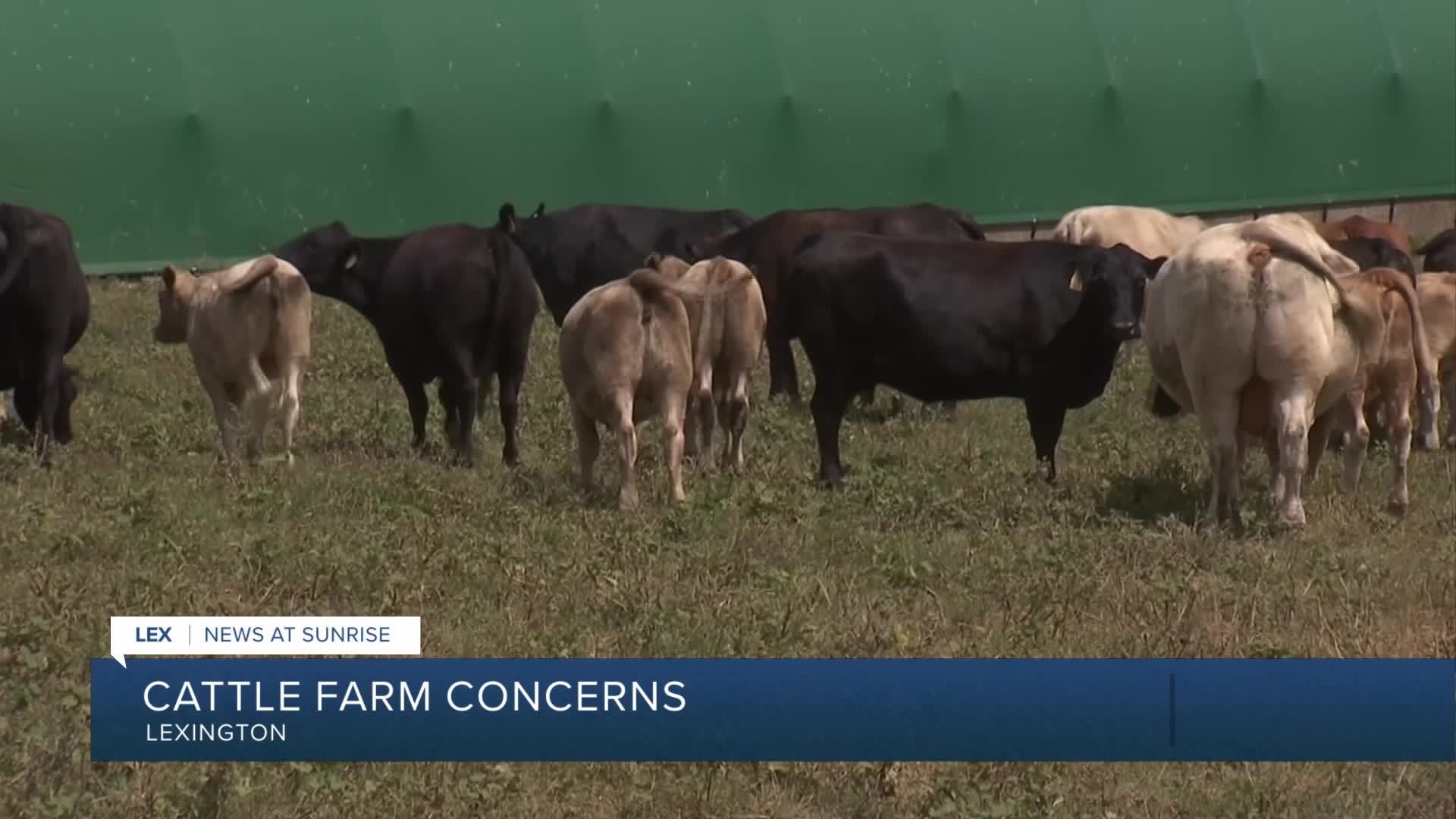



LEXINGTON, Ky. (LEX NEWS) — From extreme weather conditions, to disease affecting the cattle and economic policy, there's growing concern and uncertainty among America's cattle farmers.
"It's been extremely difficult, the last decade to grow a cow herd in the United States," said Jim Akers with Blue Grass Stockyards. "You've had natural disasters in the west. Fires droughts, and here, it's about access to land."
Akers spoke with LEX News before Tuesday's cattle sale, where prices and supply have been a concern for a while. Those concerns reached a fever pitch late last week when President Donald Trump announced a plan to import hundreds of thousands of tons of beef from Argentina, but it didn't stop with that announcement.
"The reality of the opening of the Mexican border yesterday really put a lot of pressure on the market. We saw the futures down $5 yesterday. It didn't impact the cash market quite as dramatically here, but they were cheaper, and they're going to be," Akers explained of those two decisions.
Access to land is another issue as federal and local government agencies are acquiring land for affordable housing projects, solar farms, and data centers. It also hasn't helped that what was once a family business is losing the next generation to other industries.
"Well, that's a concern, you know. You got high land values. There are all these other outside influences. That's more alarming to me than actual beef prices," said Woodford County farmer, Jeremy Shryock.
Shryock, however, like Akers, understands the volatility of this business and the cyclical nature of it as well.
"We're really resilient," Shryock said. "I think it's been kind of blown out of a little bit of proportion. Yeah, the cow numbers are down, but beef production is only down two or three percent if you look at it as a big number, so we're still doing the job producing for the American people, and there's plenty of beef out there to buy. Might be a little pricey, but you know everything's how this day and age," he added.
The added supply from Argentina will dilute the value of the product being grown and produced here, and still that imported beef has to be mixed with American product to be made into hamburger meat. The two factors might drop prices that farmers can't match to remain profitable.
"My concern is we're going to go through all this pain and agony and damage to the market for the producers and the cattle people, and we're not going to give consumers the relief that they're expecting," Akers said.
"Are we going to see another 2015 where the bottom just drops out? You know, does it settle at a level that everybody's okay, or are we getting ready to lose a bunch of money? That's the question that nobody really knows the answer to," Akers explained.
