

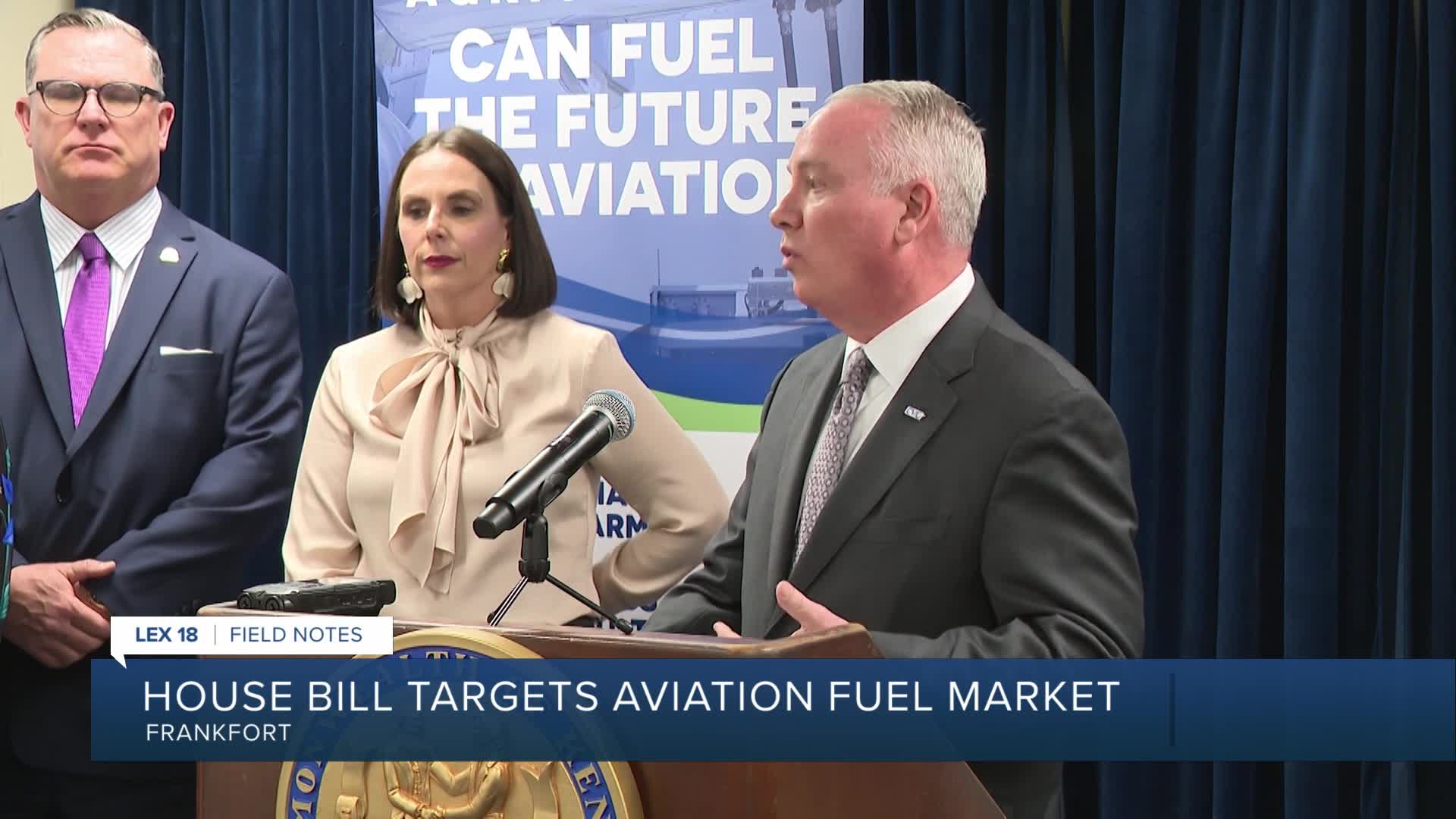


FRANKFORT, Ky. (LEX 18) — Kentucky's farmland could soon help power the aviation industry. That's the pitch from state and industry leaders backing House Bill 545, a proposal that would offer tax incentives to produce and blend sustainable aviation fuel made from Kentucky-grown crops.
Supporters say the bill could deliver major benefits for both aviation and agriculture, and that the state can't afford to wait.
"This is not a 'Can we or should we,' this is a must for the state of Kentucky," Agriculture Commissioner Jonathan Shell said.
House Bill 545 would incentivize the production of sustainable aviation fuel using Kentucky-grown feedstocks like corn and soybeans. Proponents say the demand is already there — airlines are actively looking for reliable domestic supplies.
Speaker Pro Tempore David Meade said Kentucky risks being left behind if it doesn't act.
"Airlines across the country are actively searching for reliable supplies of this fuel, cargo carriers and passenger airlines are signing long term agreements, and the question isn't whether the industry will grow, it's whether or not Kentucky will be a part of that and capture the investment or if we're gonna watch it go to other states," Meade said.
Larry Krauter, CEO of Cincinnati-Northern Kentucky International Airport, said the economic opportunity is significant.
"$100.3 million is the estimated economic impact of one European commercial flight destination from CVG. When you think about the opportunity to leverage the connection through air service development, we must have this tool," Krauter said.
The benefits, supporters say, extend well beyond the runway. Agriculture leaders believe the bill would open new markets for both seasoned and beginning farmers, making their operations more profitable.
Eddie Melton, president of the Kentucky Farm Bureau said the goal is straightforward.
"Making our farms more profitable every day is what this is about," Melton said.
Row crop farmers could see the biggest gains, since corn and soybeans are among the primary feedstocks used to produce the fuel. Shell said Kentucky currently has more agricultural supply than demand — and that this bill could help rebalance that equation.
"This has an opportunity to re-correct the market place so our farmers can produce and get higher prices and more acreages available for them to produce," Shell said.
Advocates point to Kentucky's history of using incentives to launch biodiesel and ethanol industries, along with its existing cargo hubs and logistics networks, as reasons the state is well-positioned to lead.
Shell said the window to act is now.
"If we don't come out of this session with an incentive and with this policy work in the right way, we'll look back in 20 years and wonder why we weren't the first to market," Shell said.
Meade said it's late in the session, meaning a standalone bill likely won't move forward. Instead, he said the proposal could be folded into the larger revenue bill.
