



CLARK COUNTY, Ky. (LEX 18) — Skyrocketing diesel prices and climbing fertilizer costs are squeezing farmers as the war in Iran persists. While conventional farms face mounting pressure from both crises, one organic farm in Clark County is weathering the fertilizer storm while still fighting the diesel shortage.
Laura Ann Freeman is the owner of Mt. Folly Farm and chairwoman of Mt. Folly Farm Enterprises. Her regenerative farm has run on compost, soil fertility, and green manures for 45 years. Across 200 acres, her team raises cattle, grows hemp, and produces regenerative products, including farmer-distilled whiskey.
Because organic farming does not use nitrogen-based fertilizer, Mt. Folly is not feeling the price pressure many conventional farms face as the war cuts off supplies.
"The implication is, prices have to go up. Either you go broke or the prices go up," said Freeman. "The Trump administration has a relief fund, but it's not anywhere near what's gonna make people whole."
While Mt. Folly is shielded from the fertilizer shortage, diesel is another story.
"We grow our own fertilizer and we use compost, but we need diesel to sell our crops," Freeman said.
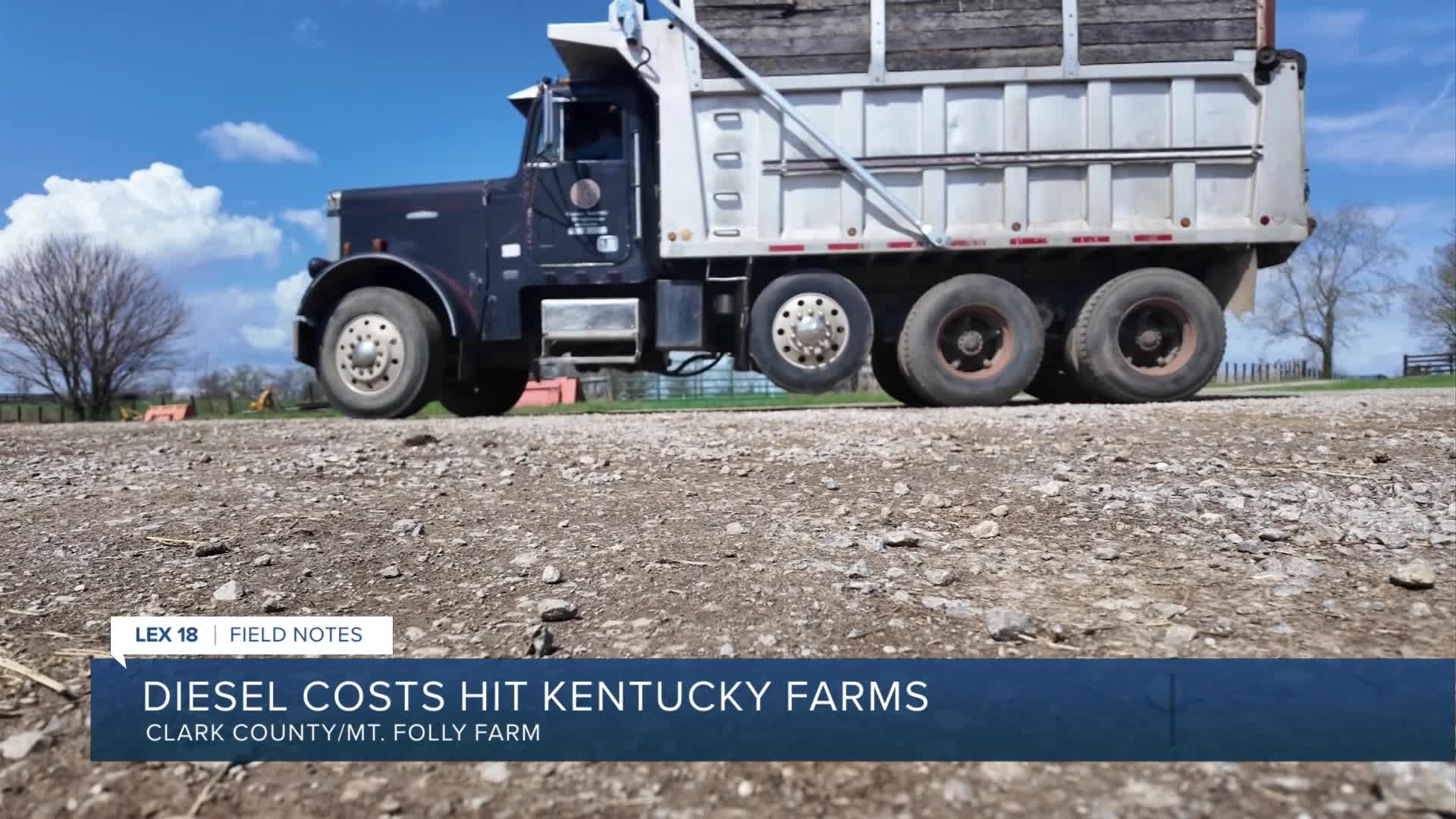
The truck hauling Mt. Folly's crops runs on diesel, which costs over $5 a gallon in Kentucky right now. Before the conflict began, Freeman could fill the truck for $150. Now, it costs closer to $275.
Her tractors run on dyed diesel. It is cheaper than regular diesel, but the price is still climbing.
"Oh everybody is nervous as nervous as can be," Freeman said.
The last time she fueled up, her supplier had to draw the line.
"We didn't get a full tank fill-up and nobody did, and she said if you call me and you're not empty, you're off the list," Freeman said.
Her dyed diesel tank holds 400 gallons, but the supplier could only offer 300 gallons.
"When we get low, I'll go in and see Miss B and pay my bill and beg for more," Freeman said.
In the meantime, Mt. Folly is using its most fuel-efficient tractor and driving less. For a farmer leading regenerative agriculture, Freeman sees the answer in a different kind of fuel. One day, she hopes to build a soybean-powered diesel station.
"That may be my last thing to do, but I'm really thinking about it," Freeman said.
