

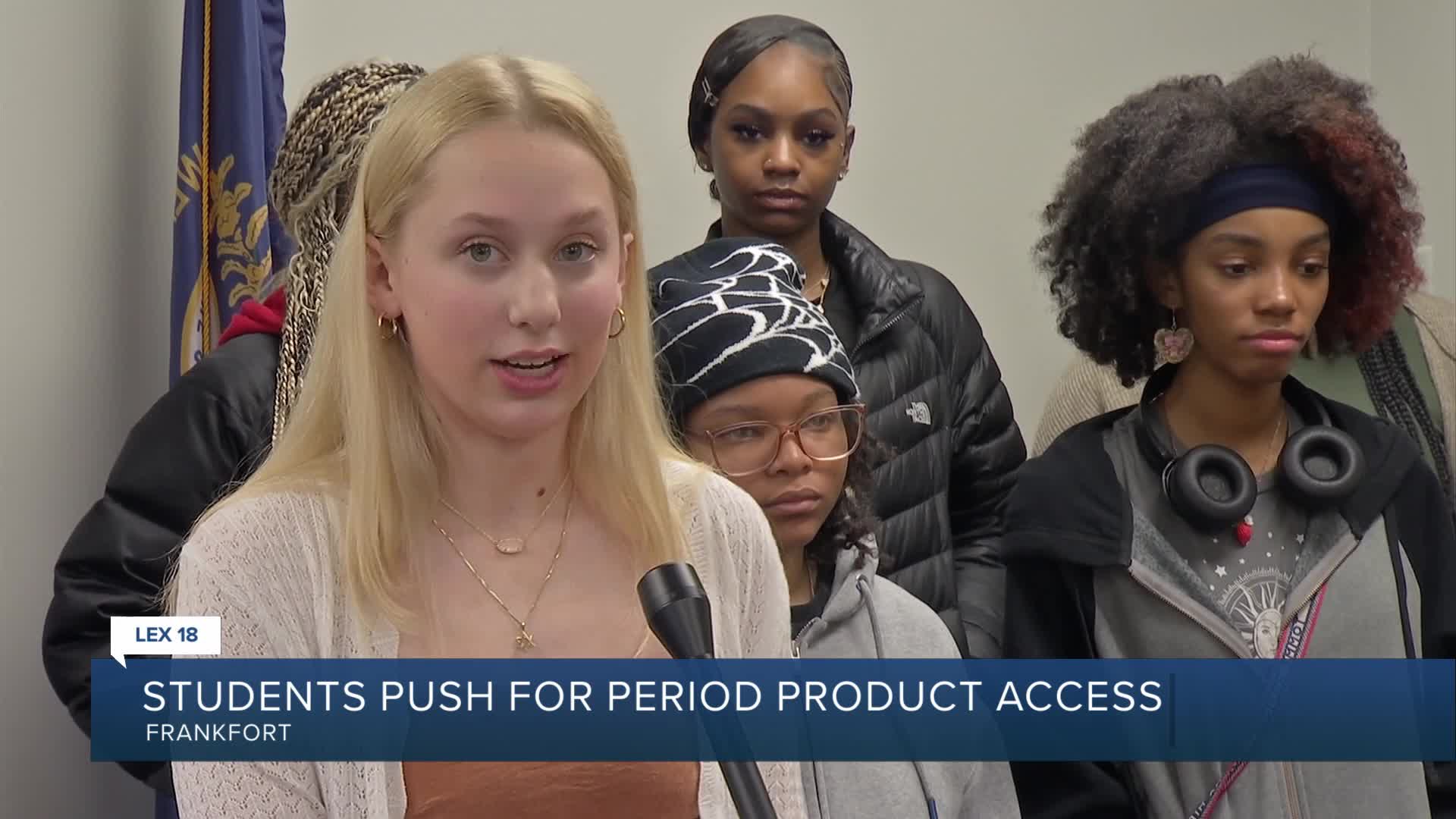


FRANKFORT, Ky. (LEX 18) — Students from across Kentucky traveled to Frankfort to advocate for free menstrual products in public schools, pushing for passage of House Bill 95 — legislation that would require schools serving grades 6 through 12 to provide the products at no cost to students.
The ACLU of Kentucky says 1 in 3 low-wage Kentuckians miss work, school, or important events due to a lack of menstrual supplies. Nationally, 65% of teens report missing class due to period-related challenges.
Advocates say students who go too long without access to fresh menstrual products are also at risk of bacterial infection.
House Bill 95 would require Kentucky public schools serving grades 6 through 12 to provide free menstrual products while ensuring schools receive the funding to do so. That funding would be approximately $2 million from Kentucky's General Fund.
"When young people lead, we should listen. Today, they are telling us something simple and powerful. Basic health needs should never stand between a student and their education," said Rep. Lisa Willner (D) of Louisville.
"That is lost instructional time. That's barrier to opportunity," said Rep. Willner.
"This goes beyond a bathroom issue," Lexington student Rosie Katz said. "This is, without a doubt, an education issue."
"You can get bullied if you don't have that type of stuff. If you bleed through your pants, that can be very embarrassing and that can cause students to not want to go to school. And when they don't come to school? What -- they're not learning. And that's bad for our future. Because for our future, we want students to excel," said Louisville student Mila Collins.
Despite broad support from advocates and students, the bill has seen no movement in the Rep. Willner expressed frustration over the lack of action.
"Frustrated. It makes me feel frustrated because this is a real issue for real kids. I hear every day from my colleagues that our students are our future, it's the most important thing we have, and here are students telling us what they need and the fact that we're not even having these conversations is extremely frustrating."
