

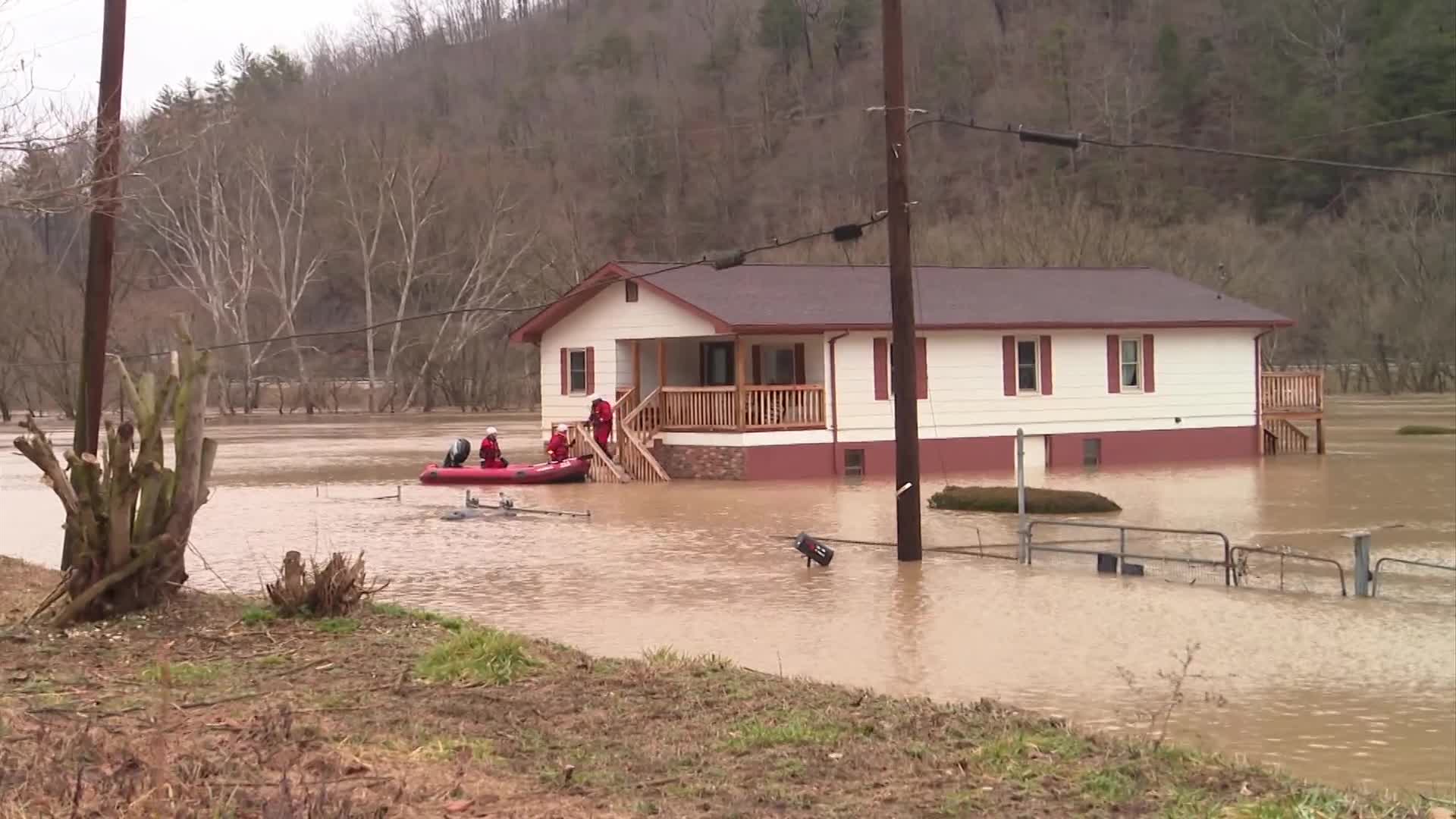


JACKSON, Ky. (LEX 18) — March marks peak flood season in eastern Kentucky, with the full busy season running from December through May, according to the National Weather Service in Jackson. With February coming to an end, the Kentucky Flood Safety Week is a time for professionals to remind Kentuckians how to stay prepared for peak flood season.
A little more than a year ago, deadly flooding killed 23 people in February 2025. During those critical hours of flooding, the National Weather Service (NWS) in Jackson stayed busy alerting Kentuckians of flooding dangers.
“I was already issuing flood warnings for river points pretty early on,” Pete Geogerian, service hydrologist at the NWS in Jackson recalled. “We started off with flash flooding, and then we went to just general flooding across most of the area, because the rain just continued throughout the day and into the evening.”
This week, the NWS is giving some reminders as part of Kentucky Flood Safety Week.
“Here we are late February, we're headed into kind of our peak season for flooding,” Geogerian said. “It's good to be prepared.”
When preparing for a flood, it’s important to make sure you have water for several days, non-perishable food items, and an emergency kit. People who live in or near floodplains should also plan an evacuation route before waters rises, making sure you have a place to go if you do need to leave your home.
“You can practice that right now,” said Geogerian. “You don't have to wait for an event to be prepared.”
While there's always room to improve when it comes to flood preparedness, Georgerian said one thing that he'd like to see Kentuckians work on is following the rule, "turn around, don't drown."
“A lot of flood deaths occur in vehicles, people driving through water,” he added. “We don't like being inconvenienced, right? ‘I don't want to have to go this really long way, I want to get home,’ but just a simple decision may may save your life.”
The National Weather Service monitors current water levels and future forecasts for rain amounts to evaluate the potential for flood risks. While you can put a plan in place now, you should pay attention once a watch is issued for your area.
“That kind of tells you like, ‘Okay, I need to be more vigilant about just keeping up with these changes in the forecast,'" Geogerian said.
Another way to know your risk level when it comes to living near a floodplain is by visiting the Kentucky Flood Hazard Portal. You can zoom in on a map at this link that shows flood hazard zones and risks.
