

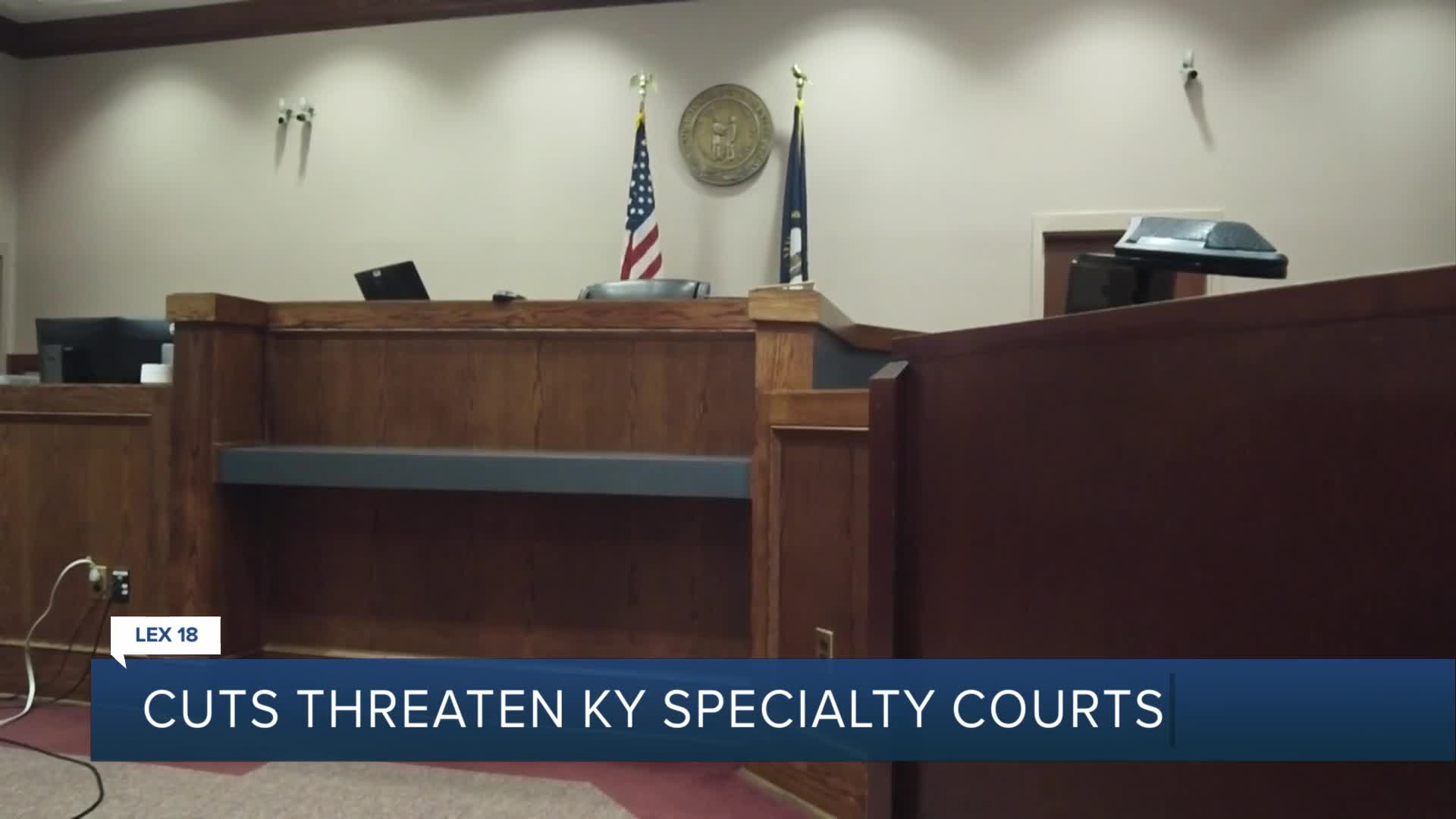


FRANKFORT, Ky. (LEX 18) — A proposed state budget bill moving through the Kentucky General Assembly threatens to dismantle critical services within the state's Judicial Branch, including specialty courts that support nonviolent offenders.
House Bill 504 would underfund court operations by $14.3 million in 2027 and $18.7 million in 2028. While the Judicial Branch budget makes up just 3% of Kentucky’s total General Fund, the programs it supports are life-changing, according to Judge Kathryn Gabhart.
Gabhart, a circuit judge for the 14th Judicial Circuit serving Scott, Woodford and Bourbon counties, said the consequences of the cuts would be devastating. Judges would not lose their jobs or see pay reductions because they are protected as constitutional officers. However, employees who keep courthouses and courts running could be furloughed or laid off, and programs that are not constitutionally required could be forced to end.
“Drug courts, mental health courts, veterans treatment courts — they are additional services that we provide through the justice system, so that would be the first to go,” Gabhart said.
Specialty courts keep nonviolent, high-risk offenders out of jail while addressing the root causes of crime. Participants spend 18 to 24 months working with judges and case managers, receiving treatment and drug testing to help them build stability.
“The 85 people in my drug court and mental health program — if they no longer have these programs and they recidivate — they would go to jail, into a facility that is already overcrowded,” Gabhart said.
Drug courts operate in all 120 Kentucky counties, while mental health and veterans treatment courts serve select areas. Judges volunteer their time for these programs because they have a passion for the work, Gabhart said.
“It helps them lift out of their disorder into recovery so they can get a job, start taking care of their family, pay back restitution or fines, and not only do they do that but they start giving back to the community,” Gabhart said.
According to the Administrative Office of the Courts, these programs have helped 5,100 Kentuckians find jobs and 555 achieve educational goals since their inception. Participants have obtained 2,025 driver’s licenses and the programs supported the births of 404 drug-free babies.
Gabhart said the outcomes are deeply personal.
“I have an individual who’s about to go to law school, individuals working at treatment centers about to become peer support specialists,” Gabhart said.
Lawmakers are expected to finalize the state budget by April 1. If the budget passes as written, Gabhart said the future of specialty courts is grim.
“It won’t work,” she said.
