



LEXINGTON, Ky. (LEX 18) — The most common type of birth defect in the U.S. are congenital heart defects, affecting around 40,000 births each year according to the CDC. Out of that group, about 25% of infants need surgery in their first year.
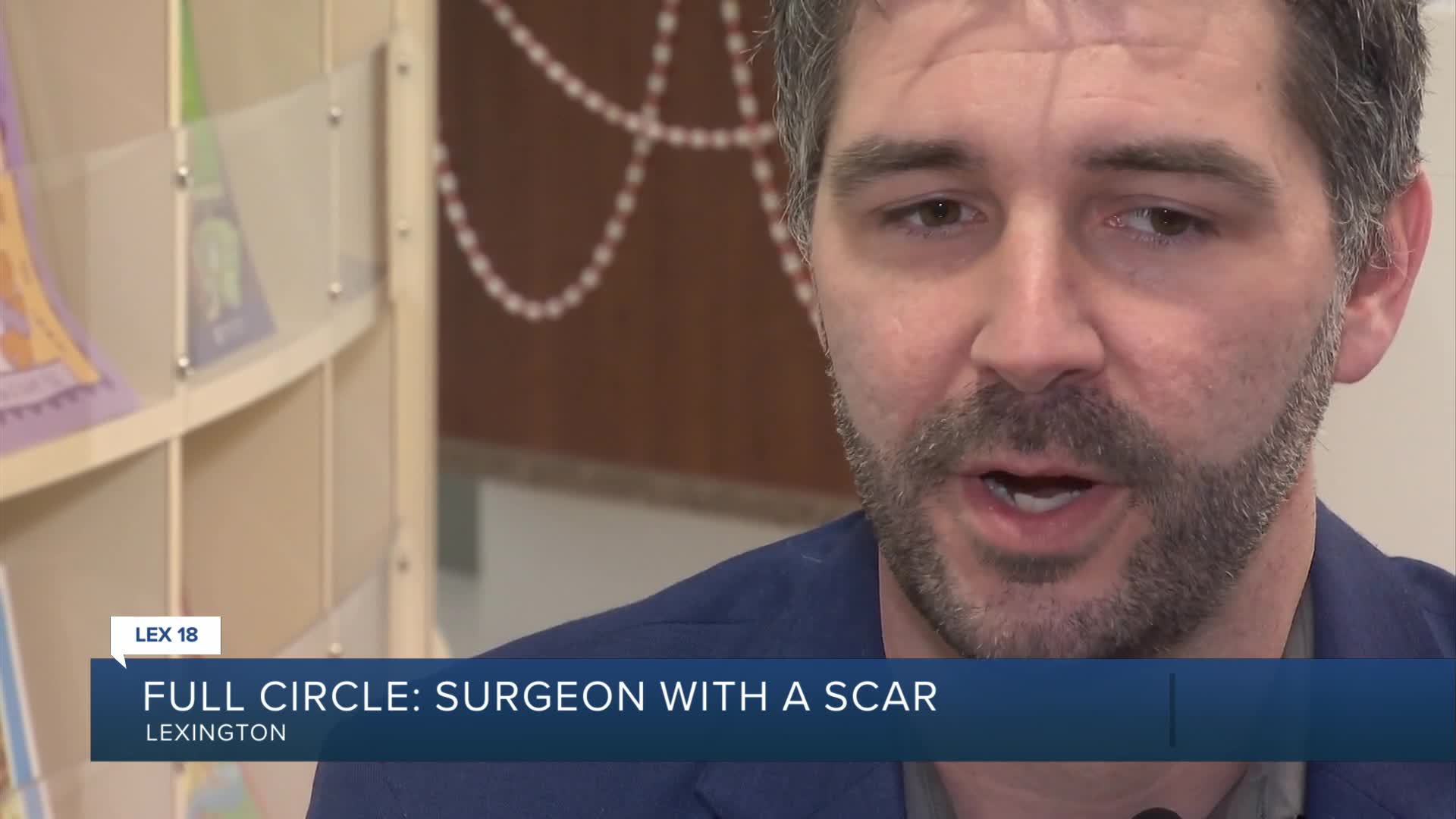
One pediatric heart surgeon at the University of Kentucky, Dr. Kyle Riggs, has had a scar over his chest for a long time.
“At 15 months old, I had my first heart surgery,” Riggs shared.
The surgery repaired Tetralogy of Fallot, a congenital heart condition Riggs was born with. Despite two later smaller surgeries at ages eight and nine, Riggs grew up like most kids.
“After that, it was really just the scar on my chest and the annual visits to the cardiologist and things that kept it in my mind,” he said.
Those visits became more than just checkups when Riggs was 16. A career guidance course pointed him towards the medical field.
“At that point I reached out to my cardiologist who I’d been with since birth and my family loved and I asked him about the path to becoming a pediatric cardiologist at the time,” said Riggs. “Being so hands-on with things, and active, and building with Legos kind of led me to surgery instead of cardiology.”
This heart history is a help for Riggs, who now works with kids as a pediatric heart surgeon.
“The full life that you can give them after surgery is so unique and different from the adult world,” he said.
As someone who’s been there, Riggs sees his scar – and story – as a unique tool.
“I like to use it to relate to families to help give them hope and alleviate some of their concerns,” he said. “I like to use it as a way to say you can have heart surgery, you can come back and play sports and otherwise live the normal life that I’ve described to you.”
