

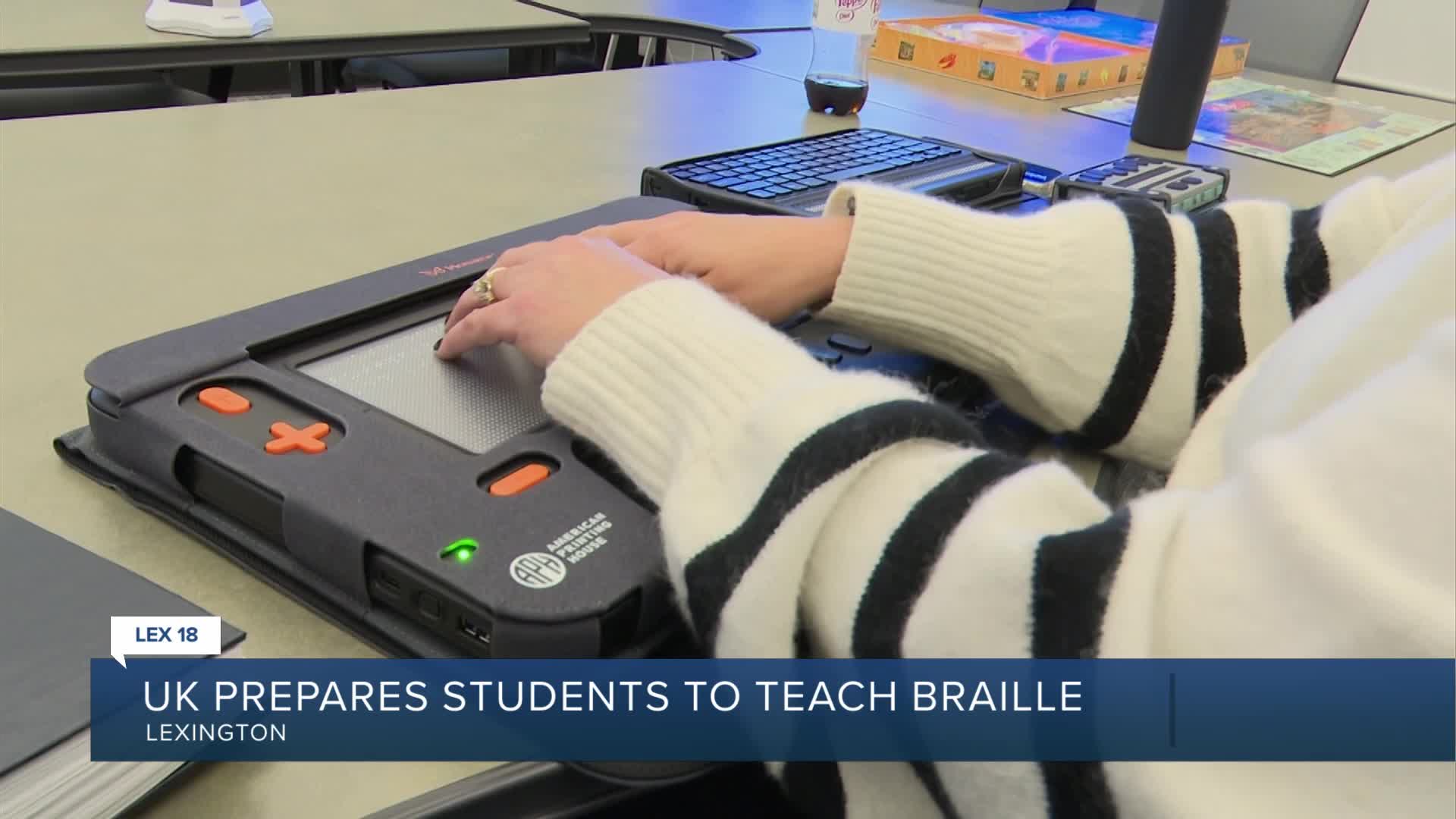


LEXINGTON, Ky. (LEX 18) — More than 1,000 children in Kentucky have a visual impairment, but education advocates say that doesn't mean they should be left behind.
"Often people say a picture is worth a thousand words, but a picture in braille, there aren't enough words," said Dr. Amanda Lannan.
Dr. Lannan is an associate professor with the University of Kentucky's College of Education Visual Impairment Program. She was born blind.
"I can't tell you how exciting it is when I go into the restaurant and I have the opportunity to look at braille menu, I guarantee you're going to convince me to get a dessert if there's a braille menu," said Dr. Lannan. "It's much different when you look at something, actually look at it, then when you just hear it."
She works alongside program chair Dr. Donna Lee.
"If you could imagine having a child and sending them to school and the school saying we don't have anyone that can educate your child, that is awful," said Dr. Lee.
Dr. Lee says the Visual Impairment Program at UK is the only one in the Commonwealth to prepare future teachers how to teach blind students.
"Visual impairment does not discriminate based on race, socioeconomic status, or where you live," said Dr. Lee.
Dr. Lee and Dr. Lannan tell LEX18 braille levels the playing field.
"It absolutely is more accessible, more available, and absolutely more relevant now than ever before," said Dr. Lannan.
Dr. Lannan says the digital advancements with E-Braille have improved accessibility vastly.
"These devices put braille at someone's fingertips in real time, we don't have to wait for an embosser, to emboss all of the pages, we don't have to wait for someone to transcribe, it's a way to get braille to someone right then," said Dr. Lannan.
January is braille literacy month, but Dr. Lannan says she pushes for more awareness year around.
"It's not about our ability to do things, it's about whether we have equitable access to do the things sighted people do," said Dr. Lannan. "The impression is 'oh because you're blind you can't do these things' but it's not because someone is blind, it's because the access isn't there."
To learn more about the Visual Impairment Program, click here.
