



(LEX 18) — An Alaska Airlines cargo flight operating for Amazon struck a flock of Canada geese shortly after takeoff from Cincinnati/Northern Kentucky International Airport on January 28, 2026, forcing the crew to declare an emergency and return to the airport. The National Transportation Safety Board is investigating.
Alaska Airlines Flight 2616, an Airbus A330-343, departed runway 27 at Cincinnati/Northern Kentucky International Airport in Hebron, Kentucky, at approximately 3:05 p.m. local time, bound for George Bush Intercontinental Airport in Houston, Texas. The aircraft was operating as a cargo flight for Amazon.com Services LLC.
According to the flight crew, while climbing through 900 to 1,000 feet, the captain observed a flock of geese flying from right to left and called out a warning. The crew then felt multiple birds strike both sides of the aircraft.
Following the strike, the crew observed an engine fault warning on the plane's electronic centralized aircraft monitor, followed immediately by an engine failure indication for the No. 1 left engine. The captain alerted air traffic control, declared an emergency, and requested a return to the airport. Air traffic control directed the flight to land on runway 36R.
During the return, the crew observed smoke entering the cockpit and received a main deck smoke warning. The crew put on oxygen masks and followed emergency procedures. The smoke dissipated before landing, and the crew removed their masks for the remainder of the approach.
After landing, the first officer stopped the aircraft on the runway. Airport rescue and firefighting personnel inspected the plane. The crew completed engine failure procedures and discharged fire extinguishing agent. No fire was found, and ground personnel towed the aircraft to the ramp. Neither of the 2 crew members on board was injured.
Airport operations personnel recovered the remains of 8 Canada geese following the incident.
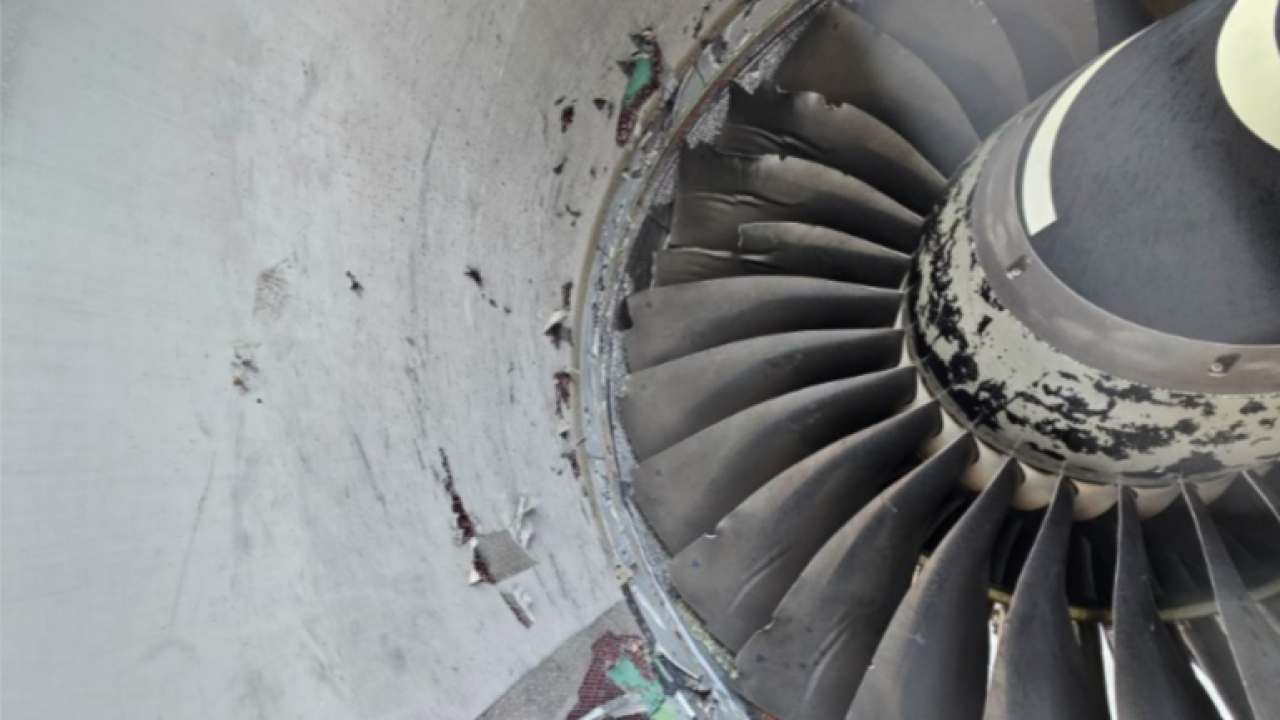
A post-accident examination found bird remnants on the left main landing gear door and strut, the left-wing inboard flap, the right engine pylon, and the right-wing leading-edge slat and slat track. Both engines showed evidence of bird ingestion.
The left engine sustained the most significant damage, with bird remnants found on the nacelle, inside and outside the inlet, and on the fan blades. The left engine fan had restricted rotation and was visibly misaligned. The right engine sustained damage to the inlet cowl acoustic liner, with bird remnants found on the spinner and exhaust nozzle. The right engine fan rotated freely.
The NTSB classified the aircraft damage as substantial. The FAA, Alaska Airlines, and international aviation safety agencies from France, the United Kingdom, and Germany are participating in the investigation. NTSB specialists assigned to the case are examining airports, powerplants, and flight data recorder information.
The investigation is ongoing. The preliminary report notes all findings are subject to change.
