

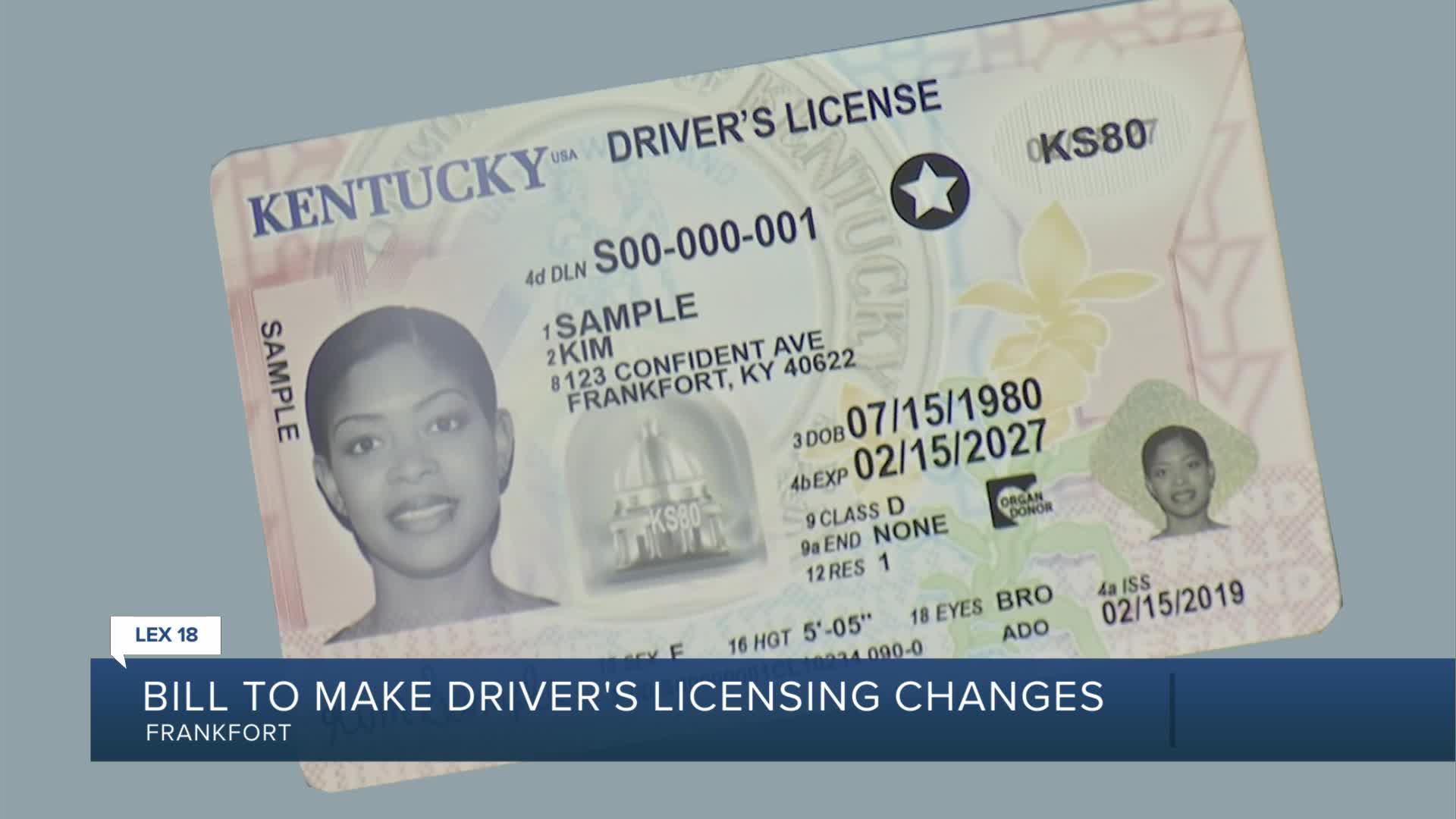


FRANKFORT, Ky. (LEX 18) — Kentucky lawmakers believe they have found a solution to the driver's licensing problems many residents have been experiencing.
Lawmakers want to bring simpler services, such as driver's license renewals, back to local communities, and the proposed legislation is gaining significant support in the General Assembly.
"The voices and the cries have been loud and clear," said Sen. Aaron Reed.
According to Reed, many Kentuckians, especially those who don't live in a county with a regional driver's licensing center, are annoyed with Kentucky's current driver's license process.
"It's always a drag. It's always an issue. It's never simple. I mean how many people have been there three times before they solved the issue they had," he said.
Reed believes Senate Bill 7 can fix these problems. The legislation returns driver's license renewal and duplicate services to local county offices in areas without a regional licensing office.

Covering Kentucky
New bill aims to bring license renewals back to the county level
Counties can choose to opt in but are not required to do so.
A local official must enter into an agreement with the Transportation Cabinet to offer driver's license renewals and duplicates. This can be a circuit clerk, county clerk, county sheriff or county judge executive.
"It's what people want. They're just sick and tired of the long drive, the long lines and a broken system that continues to let them down," Reed said.
If the Senate Bill 7 passes, only renewal and duplicate services will be offered on the local level, and people will be charged a $25 convenience fee for those cards. Some tasks will still require a trip to a regional center, mostly initial tasks, such as having a Kentucky driver's license, personal ID card or Real ID issued for the first time.
Some lawmakers believe the bill is a good compromise, especially because most people just need their documents renewed.
The bill passed out the Senate Transportation Committee on Wednesday and now heads to the full Senate for consideration. The bill already has a lot of support with 28 senators signing on as co-sponsors. If it passes into law, it will take effect July 1, 2027.
