

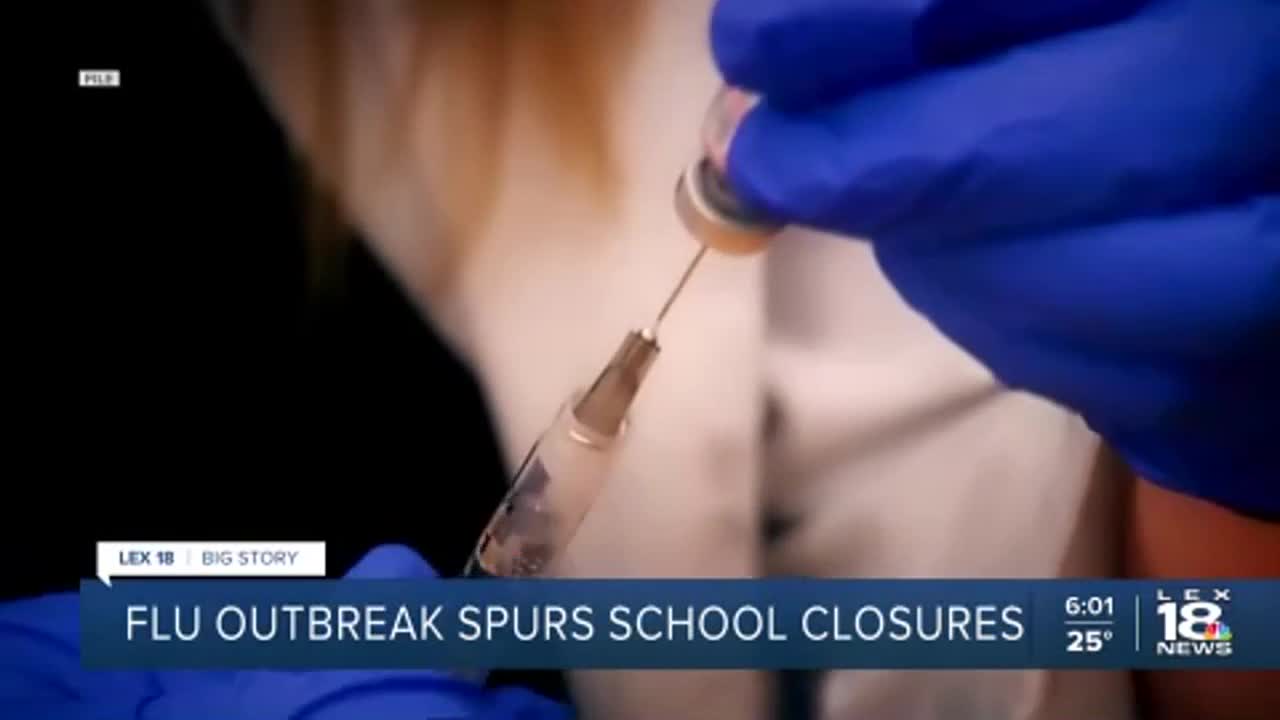


(LEX 18) — The CDC recently announced the biggest change to childhood vaccine guidelines in decades, shifting several previously routine vaccines to optional status just as seasonal illness surges across parts of the country.
Under new federal guidance, vaccines that used to be routinely recommended for all children — including flu, meningitis, hepatitis A and B, and rotavirus shots — are now advised only for high-risk children or after consulting a doctor.
The unprecedented change comes as doctor visits for flu-like symptoms reach the highest levels seen in nearly 30 years nationally, according to the CDC.
In Kentucky, flu cases peaked during Christmas week with 4,733 reported cases. This week, the state reported 2,186 flu cases — a significant decrease from the holiday surge.
However, some school districts are still feeling the impact of seasonal illness. Both Robertson County Schools and Middlesboro Independent Schools were forced to temporarily close, giving custodians time to sanitize facilities and families time to isolate.

Covering Kentucky
2 Kentucky school districts closing through Friday due to illness
"This one's a super bug and it spreads rapidly," said Victor McKay, the public health director at Buffalo Trace District Health Department.
Middlesboro didn't have enough substitute teachers to cover classrooms, while Robertson County was sending students home due to illness. The Robertson County superintendent wrote that the number of confirmed cases of flu and strep throat had reached a concerning level.
McKay, who serves Robertson and Mason counties and helps schools decide when closures are needed, explained the rapid transmission in close-knit communities.
"Everybody knows everybody. Not only do they go to school together, they hang out together, play sports together, they cheer," McKay said.
With new federal recommendations on vaccines, guidance can feel confusing — especially as groups, such as the American Academy of Pediatrics, continue to recommend more vaccines for children than the new federal guidelines suggest.
Despite the changing federal landscape, McKay's advice remains consistent.
"They need to talk to their primary care physician if there's hesitancy, but we here at the health department strongly encourage them to get their flu vaccine, and they're still available," McKay said.
Recommendations for routine shots like measles, mumps, rubella, polio, and chickenpox have not changed. These vaccines are still universally recommended for all children.
For questions and clarification about vaccine recommendations, parents should consult with their healthcare provider.
