



LEXINGTON, Ky. (LEX18) — Horse racing is most commonly defined by what happens at the finish line.
But long before any of that, before the gates open and the bets are placed, the real work is already done.
For assistant trainer David Carroll, it starts hours before sunrise.
“Get up around 3:30… arrive at work at 4… you walk down the shed row to see who’s eating and not, who looks well and not… the whole morning is programmed. 5:30 a.m., the track opens up… it takes a village, and everyone has to do their part. Once it comes together, it’s a beautiful thing.”
That village is the foundation of the sport.

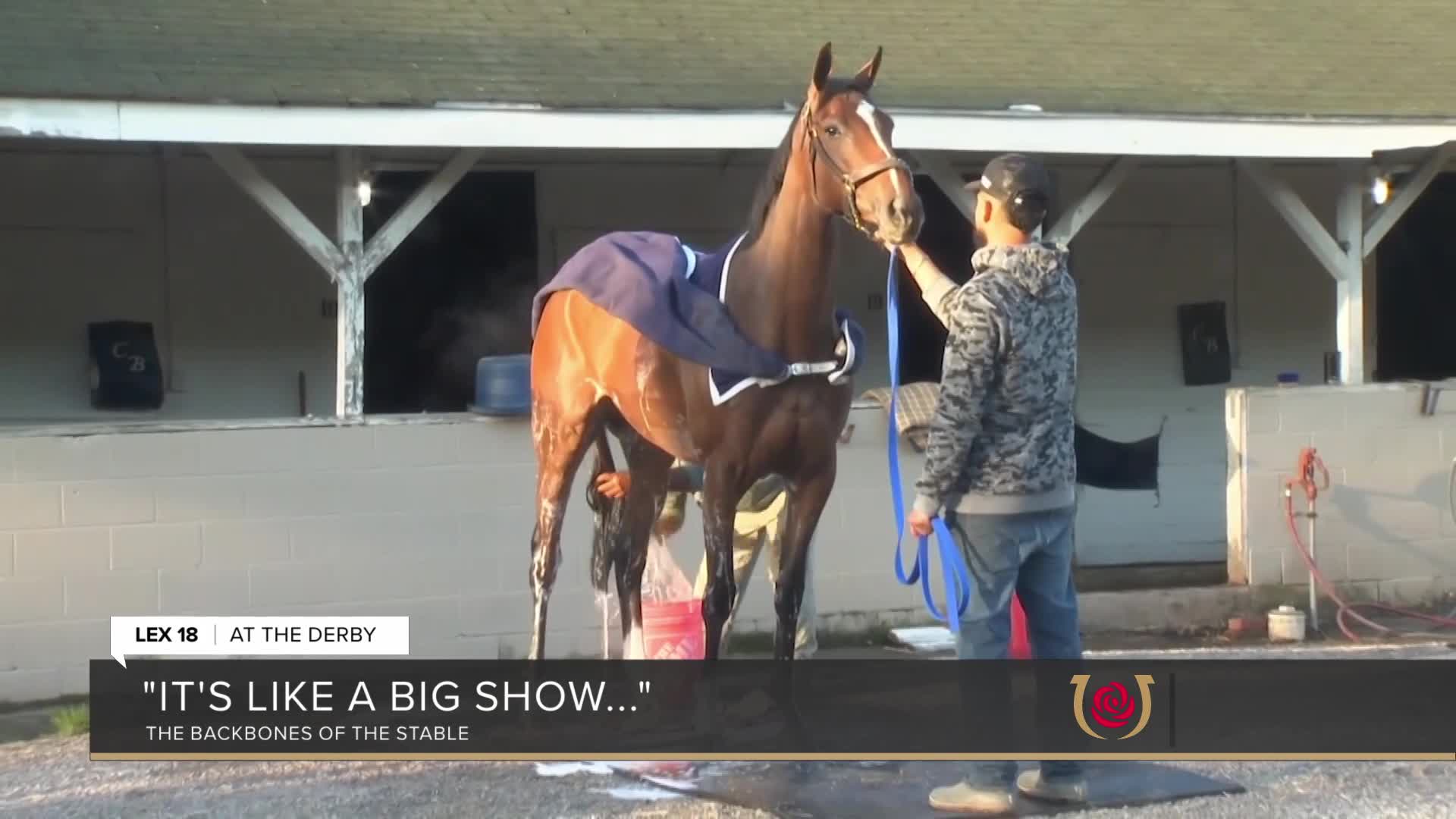
Exercise riders, grooms, hot walkers, foremen, assistants and many others each have a responsibility, all working in sync to prepare a single horse for the starting gate.
Assistant trainer Mitch Dennison said the coordination behind the scenes is what brings racing to life.
“It’s very important for us to see all the people behind the scenes that make this really happen… to get a horse to the starting gate… it’s almost like a big show that we’re getting ready for every day.”
But unlike a show, there are no days off.
“No holidays, seven days a week… the horses have to be cared for,” Carroll said.
The work is demanding. The hours are long. The sacrifices are constant.
And yet, for those who live it, the motivation runs deeper than the grind.
“It’s just a pure love for the sport and the horses… they do become your friends and almost a part of your family,” exercise rider William Humphrey said.

For foreman Diego Moreno, that commitment also carries responsibility beyond the barn.
“I am here to put bread on the table every day,” he said.
Different paths bring them here. Different stories shape who they are.
But on the backside, those differences fade into something bigger.
“You’ve got all races, all ages and different cultures… that’s the cool part of it… the culture of the backside is really what makes racing what it is,” Dennison said.
It is a community built not on status or spotlight, but on trust, routine and an unspoken understanding that every role matters.
Because for every horse that reaches the starting gate, there are dozens of hands that helped get it there.
The heart of Thoroughbred racing beats far from the cameras, in the quiet early hours and in the unseen work that makes everything else possible.
This is where horse racing is built, on the backside, by the backbone of the stable.
