

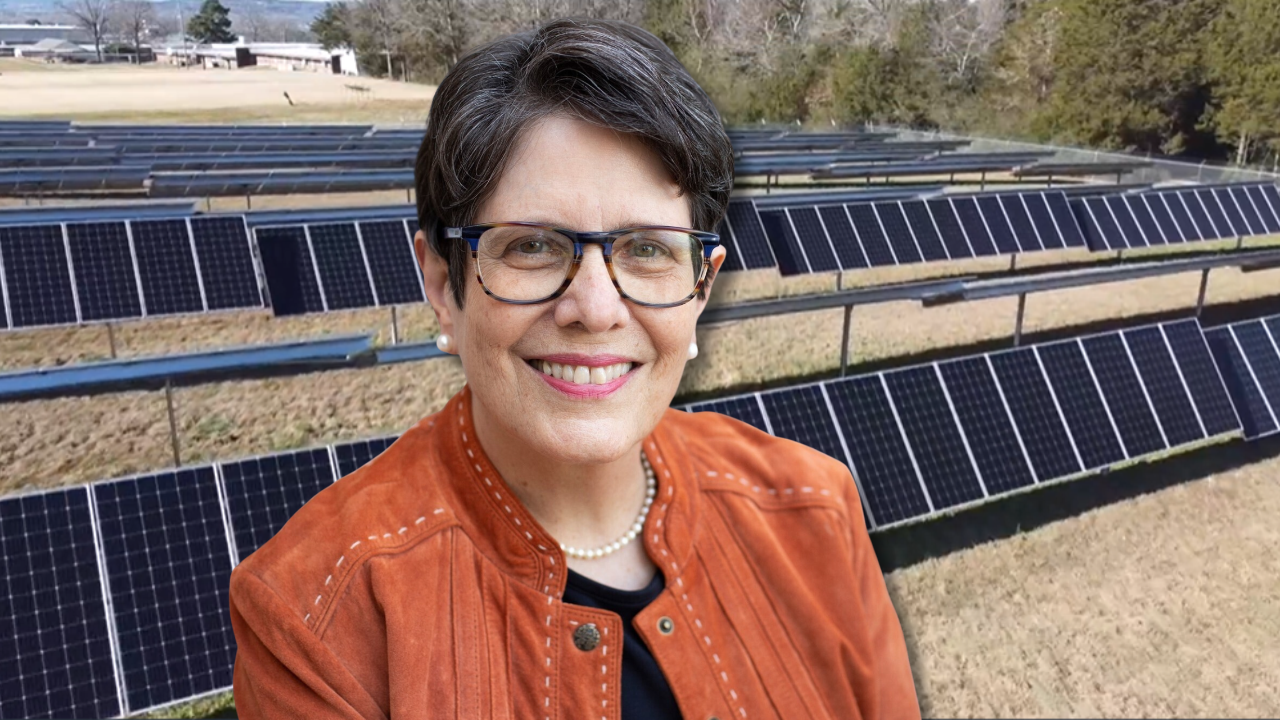


LEXINGTON, Ky. (LEX NEWS) — A two years long debate over balancing farmland preservation and renewable energy development in Lexington has reached a new turning point.
Lexington Mayor Linda Gorton announced Friday that she will veto a controversial zoning ordinance that would have allowed industrial-scale solar farms on Fayette County agricultural land.
In a statement explaining her decision, Gorton said she was concerned about the precedent the measure would set for future land use decisions.
"I am concerned about the precedent the council's actions set. It might seem like a small step today to allow an industrial solar operation on land that is zoned to agriculture, but once that door is opened, it will be hard to close," Gorton said.
Supporters of the ordinance, including Vice Mayor Dan Wu, have maintained the proposal would help advance Lexington's goal of reaching net-zero carbon emissions by 2050. The measure would cap the amount of Fayette County farmland eligible for solar development at 1% of the county's agricultural land, or approximately 1,800 acres.
PREVIOUS COVERAGE: Council approves solar facilities on farmland
But Gorton said the ordinance conflicts with Lexington's longstanding commitment to protecting its rural landscape. She noted the proposal would allow what she described as the first industrial use of Fayette County farmland since 1958.
"It doesn't make sense to disturb our environment by allowing an industrial use on agricultural land," Gorton said.
The Urban County Council narrowly approved the ordinance earlier this month by an 8-7 vote after extensive debate that stretched over nearly two years.
The mayor said she respects the council's efforts and support for renewable energy but believes preserving agricultural land remains the better course for the community.
The veto does not necessarily end the proposal. The 15-member Urban County Council can override the mayor's action, but doing so would require at least nine votes. Because the ordinance initially passed with only eight votes, supporters would need to gain an additional council member's support to enact the measure over Gorton's objection.
The council is expected to consider the veto at a future meeting, setting up another vote in one of Lexington's most closely watched land-use debates.
In a release sent to LEX News, leaders in solar and conservation reacted to Gorton's veto.
Matt Partymiller, Kentucky Solar Energy Industries Association:
Mayor Linda Gorton’s veto of the Solar Zoning Ordinance Text Amendment is a disappointing setback for the balanced clean-energy framework developed through Lexington’s public process.
The Urban County Council developed a thoughtful, balanced framework after an extensive public process and careful consideration of competing interests. The ordinance limits large-scale solar development to 1% of Fayette County, requires continued agricultural production on qualifying sites and keeps every proposal subject to local, case-by-case review. It provides certainty for landowners, local officials, developers and the public without approving any specific project.
The veto delays a measured opportunity to expand clean energy, respect property rights and create economic opportunity while maintaining strong protections for agriculture and Fayette County’s rural character. It also runs counter to the views of the roughly three in four Lexington residents who support solar energy.
Council members listened to the public, refined the proposal and adopted a responsible path forward. We respectfully call on them to override the veto and allow this balanced policy to take effect.
Lane Boldman, Kentucky Conservation Committee:
Mayor Linda Gorton’s decision to veto the Solar Zoning Ordinance Text Amendment rejects the kind of balanced public policy Fayette County needs, and the Kentucky Conservation Committee is disappointed to see that compromise set aside.
We believe the ordinance reflects the kind of balanced public policy communities should strive to achieve. The Urban County Council considered concerns about preserving farmland, Fayette County’s rural character, its agricultural economy, property rights and the need for cleaner energy.
The final amendment responds with firm acreage limits, continued agricultural-use requirements, conservation planning, decommissioning provisions and local review.
A veto discards a workable compromise and disregards the large majority of Lexington residents who support solar energy. It also diminishes the value of the public input and careful deliberation that shaped the Council’s measured approach.
Good public policy requires listening, compromise and clear safeguards. The Council did that work. We urge Council members to override the veto and preserve the balanced framework they created for Fayette County.
This is a developing story, so check back with LEX18.com for updates. Email the LEX18 Newsroom if you have info, photos or videos to share.
 Facebook
 TikTok
 YouTube
 Instagram
 Threads
 X
